📝 Detailed information
🏢 About the local organisation
The history of Open Houses dates back to the mid-1980s, when a group of young people began to restore actual disused village churches. The focus lies on restoration and public use of historical monuments, which allows a long-lasting and effective recovery of the buildings. Currently Open Houses has several historic buildings in its care. All of them are attractive ensembles which display centuries of history. But most of them stood vacant for a very long time and suffered serious structural damage.
In accordance to the above-described focus on heritage, European Heritage Volunteers, a branch of Open Houses, organises Heritage Volunteers Projects, some of them in the framework of the World Heritage Volunteers initiative. European Heritage Volunteers has been active in heritage-related volunteering for more than twenty years. Its objective is to establish links between the fields of heritage and volunteering by continuously working to foster a deeper understanding of heritage and volunteering among those active in either field, and by linking the two fields through practical hands-on projects and educational activities.
💼 What the programme involves
Lohra Castle includes architectural relics from the Middle Ages onwards; between the 11th and the 20th every century had left its traces which are still standing tall overlooking the landscape of Thuringia. However, some of the structures are in need of conservation interventions.
The project in 2021 will be a continuation of the work started several years ago, and it will concentrate on the roof constructions and the roofing of the former manor house which dates back in its core to the 13th century and has an almost unchanged original roof construction from the late 16th century as well as on a 19th century barn house. The participants will be involved in tasks to help safeguarding these historical structures by replacing damaged elements on the wooden roof structures and the roofing.
The project will be led by a master of carpentry who has additional education as Restorer in Handicraft.
Within the educational part of the programme, an overview about historic roof constructions as well as an insight in techniques for their conservation will be provided. There will be further discussions about the challenges to balance the aim to keep the historic authenticity of wooden structures on one side with the pressure to adapt heritage sites to modern uses. These discussions will also include topics relevant for the work taking place on this historical monument, such as the directives to fulfil the requirements of energy-efficiency and fire protection, which will provide an insight into the European perspective of heritage conservation work. The educational programme will be completed by a guided visit to traditional timber frame ensembles in the region.
🏠 Accommodation on site
All costs linked to the project are covered, including food, accommodation, insurance and transportation during the stay at the project. Travel costs to and from the camp place are not covered. Participants should organise their journey to and from the project place by themselves and on their own expenses. Furthermore, participants should bring their own pocket money.
ACCOMMODATION
In most of the Heritage Volunteers Projects the accommodation is located in a certain distance to the working site. The accommodation is usually very simple; there are shared rooms with simple beds or mattresses at most of the places. Shower, toilet and kitchen are at the place, but sometimes not in the same building. The equipment is simple but fair. After work, when everybody wants to take a shower, there can be a limit of hot water.
FOOD
The meals will be prepared together as they are part of the community life, what means that every participant will be responsible for the meal at least once during its stay.
📍 About the location
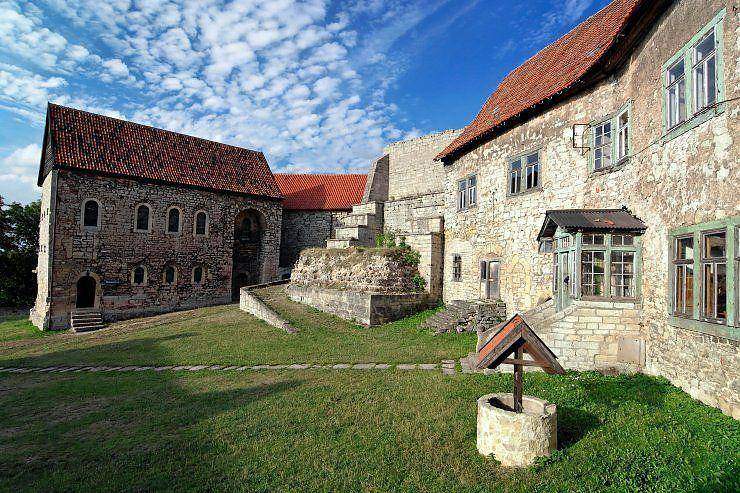
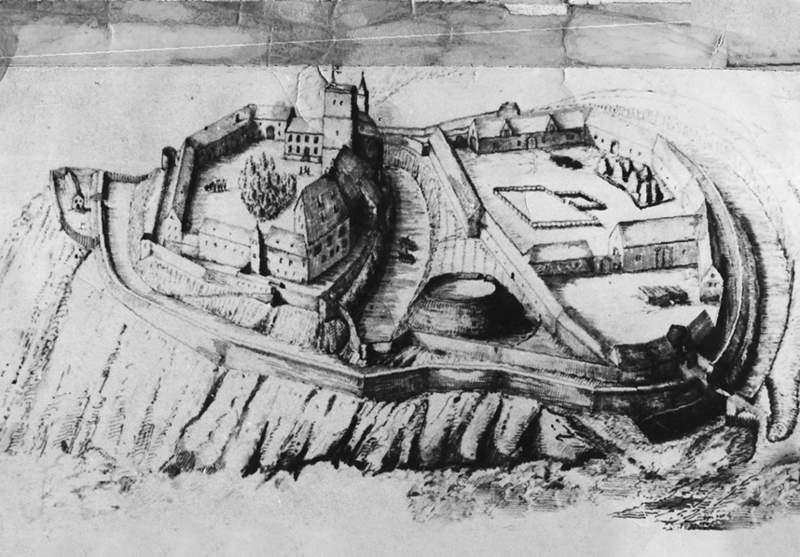
Lohra Castle is situated in the heart of Germany in northern Thuringia. The castle, which is surrounded by a scenic hilly landscape, is located on the edge of a natural reserve area. Being one of the largest castles in Thuringia, the history of Lohra Castle begins in the Middle Ages. Its architectural styles which have been preserved in the structures of the ensemble attest to a prolonged period of occupation and historical evolution up until today.
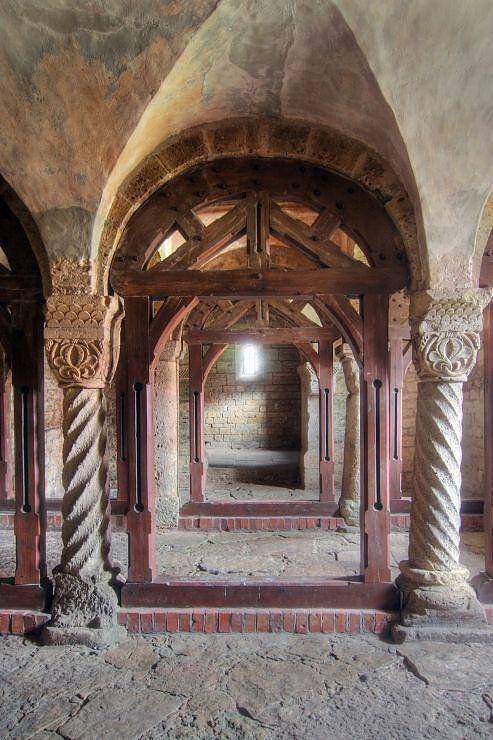
Lohra Castle is more than thousand years old, and it is a relic of German medieval past that is still standing at the heart of a region through which the story of the German nation has been written. Today, it includes twenty buildings from different time periods, showcasing this historical evolution to the enchantment of visitors and heritage enthusiasts: medieval fortifications, remnants of a tower from the 11th century, a Romanesque double-floored chapel from the 12th century, a manor house from the Renaissance period as well as stables and granaries from the 19th and the early 20th centuries.
The ensemble is situated in the midst of a beautiful forest. For decades Lohra Castle had been vacant. In the 1990s a civil society association started to rescue the castle and to revitalise it through cultural activities. This process of rehabilitation of cultural heritage not only brought new life and use to an otherwise forgotten monument, but it also provided with a new space where young people could reconnect with tangible heritage while valorising the relevance of preserving a historical monument. Since then, a large number of international workcamps, heritage volunteering projects, heritage training courses, seminars, exhibitions, concerts and other activities with international participants have been taking place every year in the castle.
⚠️ Requirements
Motivation letter related to the project
and CV + photo required
Interview of candidate prior to acceptance via Skype
ℹ️ Additional information
Motivation letter related to the project
and CV + photo required
Interview of candidate prior to acceptance via Skype