Happy Me Happy You
Code: 122a7eaa-a7d5-11ef-a62b-fa163ef8d720 Copied
About the project
Happy Me Happy You
📝 Detailed information
🏢 About the local organisation
KVDA is an indigenous, non-political and membership organization, which is non-sectarian and non-profit making, started in 1962 as a work camp organization registered under the Societies’ Act. In 1993, KVDA was registered as a Non-Governmental organization by the establishment of the NGOs Coordination Act.
Vision Statement of KVDA: KVDA envisions a more peaceful and connected world through voluntary international service.
Mission Statement of KVDA: The mission of KVDA is to promote peace, and understanding through international volunteerism combined with locally driven, sustainable development. We believe that powerful personal and global change happens when people work together, build cross-cultural friendships, and mobilize their resources to support development against dependence.
Core Values or Operating Principles
• Promotion of voluntarism.
• Transparency and accountability.
• Participatory evaluation of projects.
• Local community ownership of projects:
• Continuous research and development.
• Regular follow up of projects.
• A learning organization.
• Documentary evidence of processes and events.
Strategic Objectives
• Afford voluntary service opportunities to young people.
• Mobilize communities to action.
• Supplement formal education with experiential learning.
• Create awareness amongst Kenyan communities about development issues.
• Foster global peace, friendship and understanding.
• Mobilizing all-purpose resources to promote grassroots development.
Products and Services
a) International work camps
b) National work camps and expeditions
c) Medium and long-term volunteering program
d) Outbound voluntary service program
e) Erasmus Plus Program funded by the European Commission
f) Educational tours.
g) Development education and empowerment of communities.
h) Corporate Social Responsibility (CSR)
i) Enterprise Development Training.
j) Languages teaching i.e. Kiswahili and English
k) Inter-cultural education and use of forum theatre and non-formal education to enhance cultural diversity.
Values
KVDA has a 60-year history of working to “develop against dependence” while cultivating trust and friendships with volunteers and partner organizations all over the world. The three mandates of the organization are as follows:
■ The Association shall be a non-profit, non-governmental, non-religious and non-political Association, whose inspiration is the furtherance of peace, friendship, understanding, development, democracy and equality among peoples of different cultures and backgrounds.
■ The Association is dedicated to seeking opportunities for young men and women from diverse national, cultural and educational backgrounds to live, work and share life and experiences in order to improve their world, to provide voluntary services to marginalized communities, to acquire alternative education, to gather information and build international cooperation.
■ The Association is further dedicated to mobilizing resources within and across national borders to support community development initiatives whose aims are to eradicate poverty and human suffering as well as to promote democracy and justice among peoples.
Bright Spots
International Partnerships - KVDA has a long history of successfully collaborating with organizations around the world to deliver programs. Successful recent partnerships include CCIVS, successfully implemented 6 Erasmus+ projects funded by the European commission, Implemented Germany Government funded program “Weltwaerts”, worked with Lunaria Italy on series of EU bilateral projects, and in partnership with the Dobrudzha Agricultural and Business School in Bulgaria implemented Climate change project under Youth in Action program of the EU. KVDA served on the Executive Committee of the Coordinating Committee of International Voluntary Service (CCIVS) based in Paris France from 2004 and 2012. This history of successfully collaborating and assuming a leadership position with international organizations demonstrates KVDA’s aptitude for working cross culturally.
Network of Past Volunteers - KVDA has worked with thousands of international and Kenyan volunteers over the years since inception in 1962.
Our objectives
Communities are aware, mobilized resources and taken responsibility of their own development.
Young people have access to experiential education by offering voluntary service
Overview on voluntarism and KVDA development cooperation history
The concept of work camps began as an international movement in 1920, dedicated to a positive and creative effort to erase the hatred and fears created by the First World War.
The good work and success of the camps in the subsequent years enabled the movement to spread worldwide. In Kenya, the first work camp was organized in 1956 with the support of the British and American Quakers. Subsequently, several other camps were held and in May 1962, the Kenya Voluntary Work camps Association was formed to carry on the mandate.
The name changed to Kenya Voluntary Development Association in 1969 to widen the scope, diversify operations in the entire development spectrum with international voluntary service exchange as the core-competence of the Association.
It is important to note that the founder of KVDA, the late Cephas Mufanawo Munanairi (Popularly known as Mr. Africa) was a key Pan-African hero who hailed from Zimbabwe and came to Kenya at the height of colonial oppression in his motherland. He was inspired to join ranks with fellow like-minded people to establish an organization that would champion the cause for social justice and the idea of volunteering was captured to enable the world to appreciate its uniqueness and complementary obligations.
Since our founding, KVDA has carried on this legacy. As 2024 gains momentum, the Kenya Voluntary Development Association (KVDA) celebrates its 60th year of community oriented volunteer work and development. Over the years, hundreds of Kenyan and international volunteers have come together in solidarity and friendship to mobilize resources and benefit sustainable community development
Past projects and events
Constructed a water tank at Ole Sankale Primary School in Narok district in conjunction with Japanese International Cooperation Agency (JICA) in 2001
Renovation of Nyamaranya Primary School in Isebania, Kuria district in conjunction with the Kenya Charity Sweepstake in 2002
Constructed Nzinia Community dispensary in Tulia, Kitui district in 2002
Collaborated with Kuria Child and family program in Isebania in Migori county on Girl Child Education in 2002
Facilitated participation of the youth in Poverty Reduction Strategies through the Youth Thematic Group in 2002/3
Organized international work camps at Kakuma Refugees camp in Turkana district in collaboration with United Nations High Commissioner for Refugees (UNHCR) where volunteers worked with UN agencies to address the plight of refugees in 2002 and 2004
Improvement of Kirasha Rescue center in Kiambu through Medium and Long-term voluntary service program from 2001-2007
Hosted the 29th General Assembly and conference of the Coordinating Committee for International Voluntary Service (CCIVS) in Nairobi attended by over 100 member organizations globally in November 2004
In partnership with Nairobi Peace Initiative (NPI-Africa) and World Student Christian Federation (WSCF), organized a training workshop and work camp for the great lakes region on peace building and conflict transformation in Nairobi and Kuria/Transmara districts respectively in August 2005
Improvement of Epang’a Primary School infrastructure through short-term and long-term volunteers from 2006-2009
Participated in tree planting ceremony at Westlands Primary School and sustainable clean-up of the Nairobi rivers under the umbrella of Voluntary Associations Consortium of Kenya (VASCO) in December 2006
In 2007 re-elected into the Executive committee of CCIVS and the Executive Director elected as the CCIVS Vice President in charge of capacity building and Quality Improvement during the CCIVS General Assembly held in Ukraine.
In 2008 partnered with IJGD-Germany and SCI-Germany in implementing the “weltwaerts” one-year volunteer placement program; Germany Government sponsored program with over 20 volunteers deployed to projects for the duration of one year.
In January-February 2009 hosted in Nairobi-Kenya Euro-Africa seminar on “culture meets concepts” organized by CCIVS and sponsored by European Union.
Hosted European Volunteer Serving on arrival training in Kenya for participants for UPA-Uganda and KVDA in Kenya in September 2010 courtesy of CCIVS.
In 2010 re-elected into the Executive committee of CCIVS and the Executive Director elected as the CCIVS Vice President in charge of Quality Improvement during the CCIVS General Assembly held in Barcelona, Spain.
In 2014/15: In partnership with Lunaria Italy, Concordia France, Grenzenlos-Austria, UPA-Uganda and TYCEN-Tanzania implemented a one year women empowerment program under the Erasmus plus European commission sponsored program
In 2015/16: In partnership with PiNA-Slovenia, TYCEN-Tanzania, CAPEC-Cameroon, Lindenberg-Netherlands and CESIE-Italy, implemented a gender empowerment program through the use of multimedia methodology for the duration of 1 ½ years under the Erasmus plus European commission sponsored program
2008-2016: Hosted bilateral workcamps with volunteers from NICE-Japan deployed to Epang’a Primary School and Essumba Primary School
2014/16: Hosted bilateral workcamps in Partnership with Exchange Scotland
In partnership with Informa-Giovanni-Italy, LA Rotllana-Spain, SVI-Belgium, VOLTRA-Hong Kong and SJ-Vietnam implemented a capacity-building program on gender empowerment under the Erasmus plus program financed by the Erasmus plus Program.
In 2017 in partnership with CCIVS, participated in the stakeholders’ forum in France to launch the 2-year Erasmus plus program on Volunteer PATH (Partnerships Actions and Tools for Heritage) involving 25 CCIVS member organizations from Africa, Europe, Asia and the Americas
From 2020 to 2023 participated in the Erasmus + program under the auspices of CCIVS -IVSolution-Training and Capacity building, the Evolution for the IVS movement 618733-EPP-1-2020-1-FR-EPPKA2-CBY-ACPALA
In 2023, the Executive Director represented the organization at the Alliance of European Voluntary Service Organizations technical meeting hosted in Riga, Latvia in March 2023.
In May 2023, KVDA was represented at the Erasmus + program Evolution for the IVS movement training on the ABC for finances training held in Budapest, Hungary and hosted by Egysek-Hungary bringing together 28 organizations from Europe, Africa, Americas and Asia.
In April 2023, KVDA was represented in the final training under the Erasmus + program Evolution for the IVS movement of CCIVS-IVSolution-Training and Capacity building hosted in Paris France by CCIVS.
In September 2023, KVDA was represented at the final meeting hosted by Zimbabwe Work camps Association under the auspices of CCIVS and the theme of this conference was the decolonization of IVS.
💼 What the programme involves
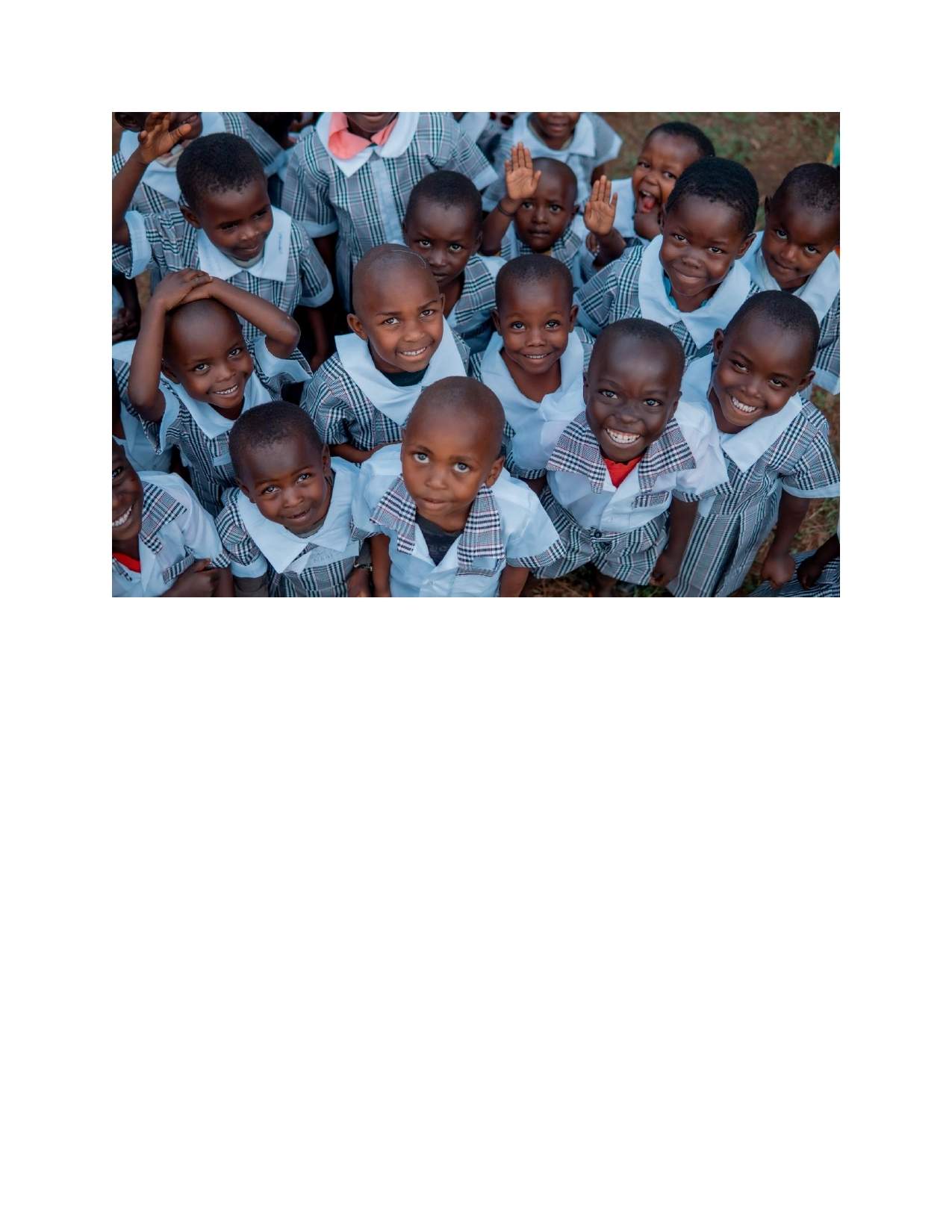
• Happy Me Happy You is a community-based organization set up to break the cycle of poverty in communities in Western Kenya.
• The group is passionate not only to support beneficiaries but enhancing the program at the grassroots to make the difference.
• The CBO has children as the priority with the number of students growing rapidly. The majority of the children are orphans who have grown up in extreme poverty with food scarcity
• By supplementing their nutritional needs, providing clean water and other basic necessities, the CBO is dedicated to provide a conducive environment for learning.
• The CBO supports parents and guardians to break the cycle of poverty in the community through food supplies, water filters, seedlings and generally enhancing the food security situation.
TYPE OF WORK CAMP: CHIL/EDU/Manu
Project Location:
• The project is located in Kipkiran village, Kipchekwen sub-location, Banja location of Vihiga County.
• The project is located 15 Kms from Majengo township along the main Kisumu-Kakamega road.
Manual work and Intercultural activities:
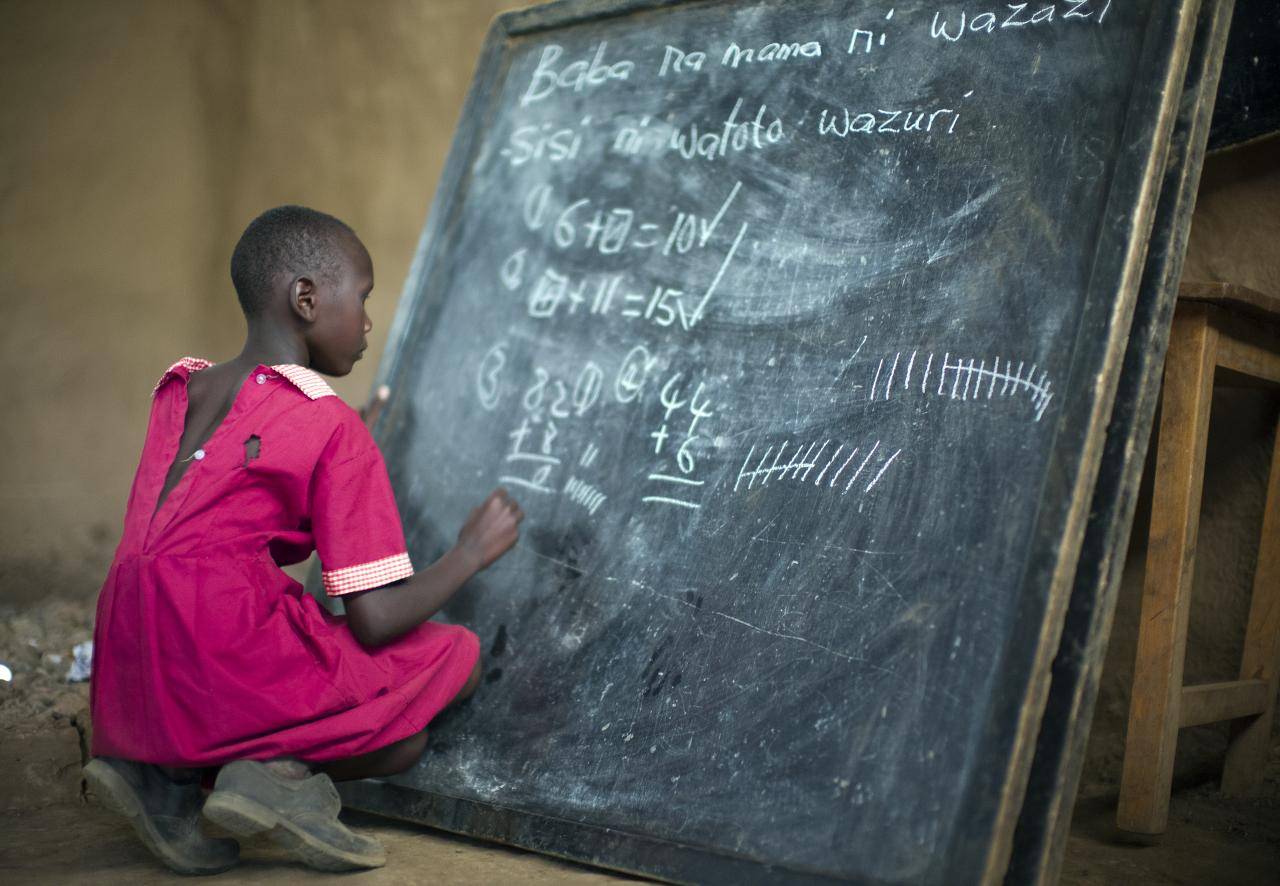
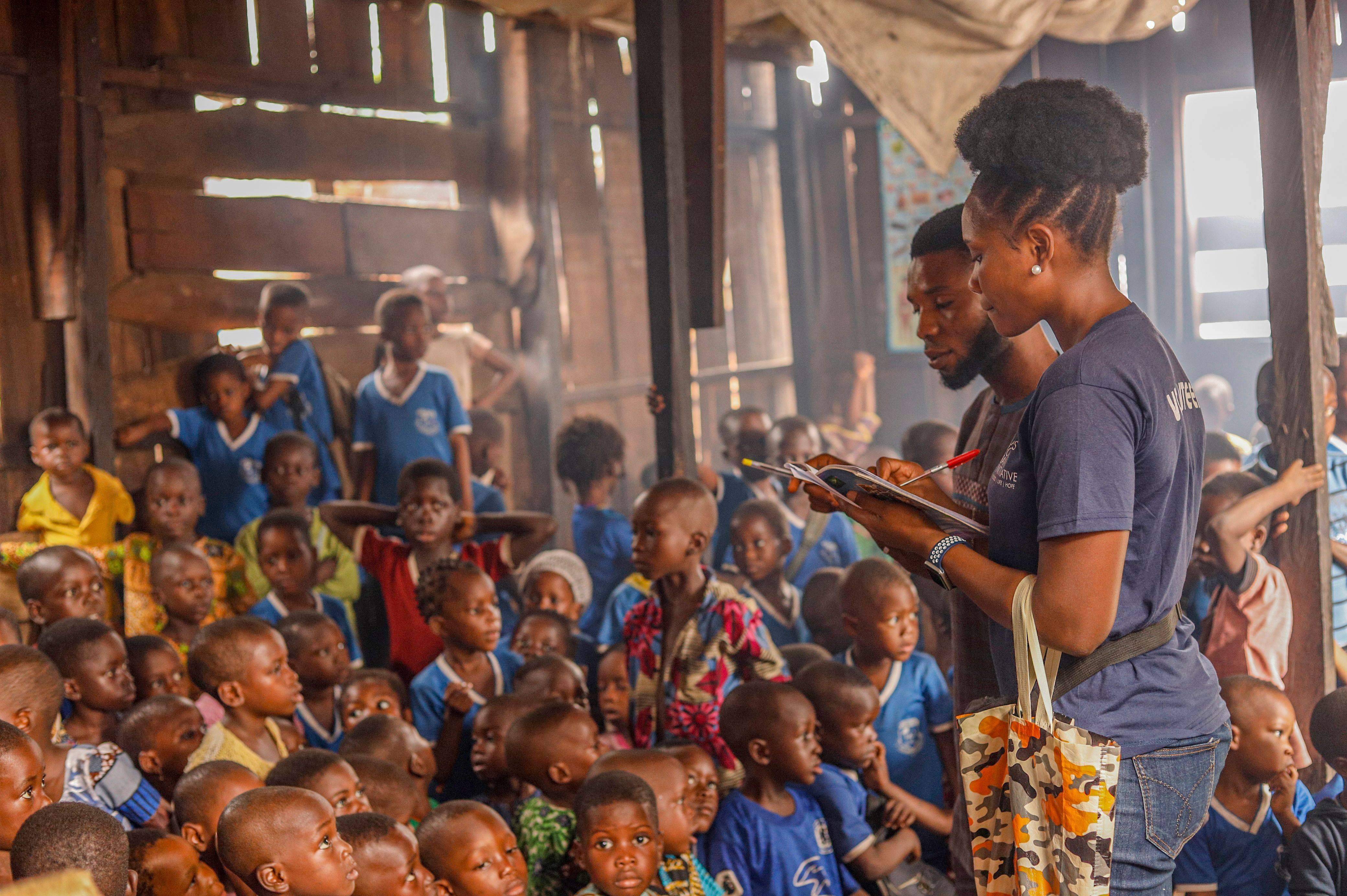
• Teaching children
• Playing with children, engage in social activities and games
• Cook and serve meals
• Manual work at the school
• Engage in team building activities with staff, fetch water for cooking and cleaning
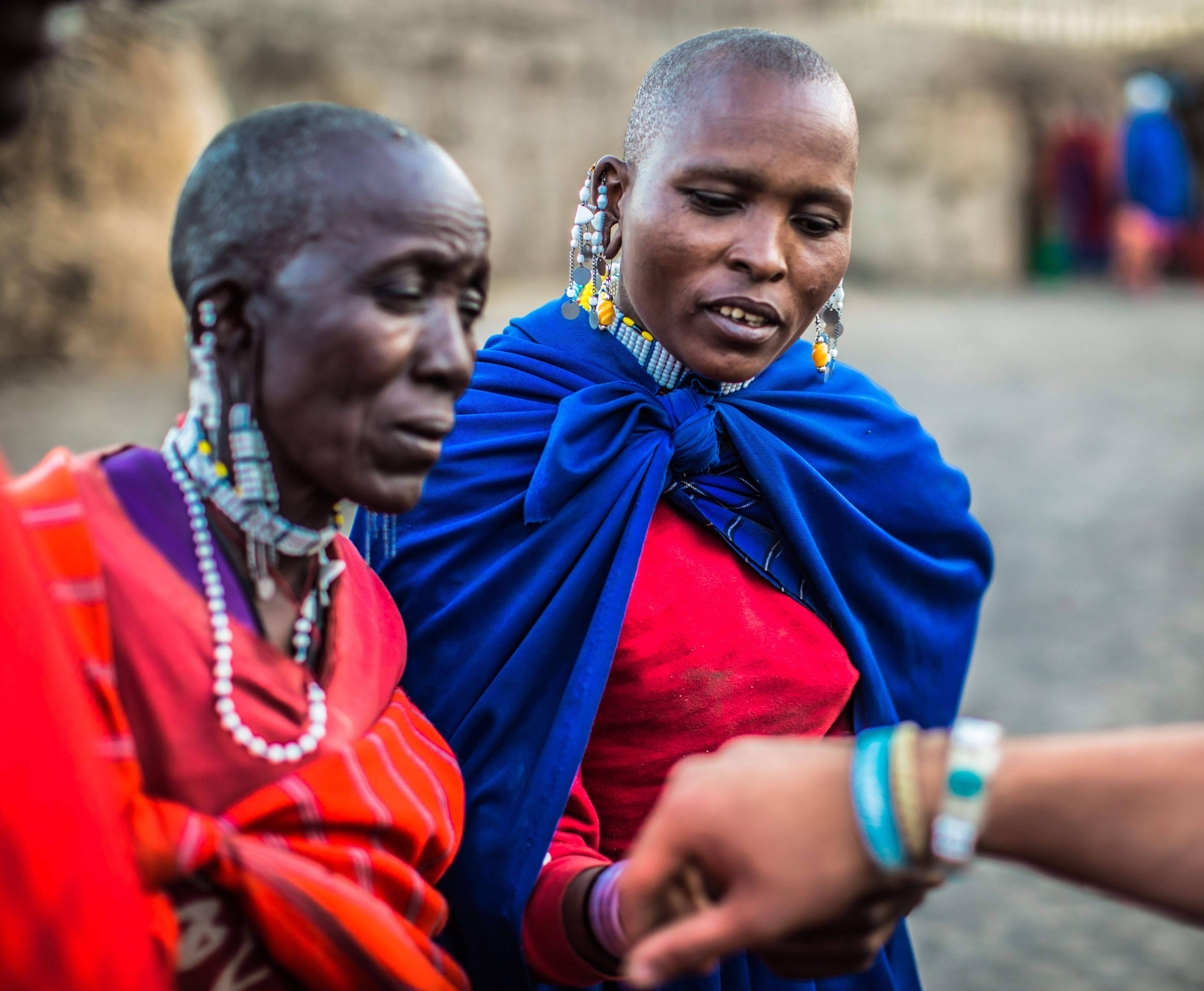
• Home visits to experience challenges of development
• Inter-cultural education to foster global cooperation
🏠 Accommodation on site
• The host community will provide a house to accommodate the volunteers with basic living conditions.
• Volunteers have an obligation to climb down the level of the people with the aim of exposure to development challenges.
🍲 Food
• KVDA will provide foodstuffs and volunteers will cook their own meals in turns.
• Water is available from springs and it is recommended that drinking water should be boiled or medicated.
• Mineral water available at supermarkets is recommended.
• There is electricity connection at the project and solar energy in case of power outages and the volunteers can charge electric appliances at the project.
📍 About the location
• The project is located in Kipkiran village, Kipchekwen sub-location, Banja location of Vihiga County.
• The project is located 15 Kms from Majengo township along the main Kisumu-Kakamega road.
🎒 Leisure activities
EDUCATIONAL TOURS
KVDA offers educational tours to spectacular sites including the renowned Maasai Mara Game Reserve at separate fees. Please contact us for specific tour information.
⚠️ Requirements
What to carry?
This is outlined in the detailed info sheet and includes, sleeping bag and mat, toiletries, torch/flashlight, sandals, mosquito net, national flag from your country, among others
DONATION AND GIFTS:
These are usually symbolic gestures to enhance the solidarity of volunteers and the hosting community. Kindly contact KVDA for details in case you are willing to support a worthy cause in the community either by offering a donation or long-term intervention on the project.
🤝 Meeting point
• This will be done subject to provision of full flight details.
• The port of entry to Kenya is Jomo Kenyatta International Airport in Nairobi.
ℹ️ Additional information
THEME: Girl child education
• Girls’ education goes beyond getting girls into school. It is also about ensuring that girls learn and feel safe while in school; complete all levels of education with the skills to effectively compete in the labor market; learn the socio-emotional and life skills necessary to navigate and adapt to a changing world; make decisions about their own lives; and contribute to their communities and the world.
• Girls’ education is a strategic development priority. Better-educated women tend to be healthier, participate more in the formal labor market, earn higher incomes, have fewer children, marry at a later age, and enable better health care and education for their children, should they choose to become mothers. All these factors combined can help lift households, communities, and nations out of poverty.
• According to UNESCO estimates, 130 million girls between the age of 6 and 17 are out of school and 15 million girls of primary-school age—half of them in sub-Saharan Africa— will never enter a classroom.
• Poverty remains the most important factor for determining whether a girl can access an education. For example, in Nigeria, only 4 percent of poor young women in the North West zone can read compared with 99 percent of rich young women in the South East. Studies consistently reinforce that girls who face multiple disadvantages — such as low family income, living in remote or underserved locations, disability or belonging to a minority ethno-linguistic group — are farthest behind in terms of access to and completion of education.
• Violence also negatively affects access to education and a safe environment for learning. For example, in Haiti, recent research highlights that one in three Haitian women (ages 15 to 49) has experienced physical and/or sexual violence, and that of women who received money for sex before turning 18 years old, 27 percent reported schools to be the most common location for solicitation.
• Child marriage is also a critical challenge. Child brides are much more likely to drop out of school and complete fewer years of education than their peers who marry later. This affects the education and health of their children, as well as their ability to earn a living. According to a recent report, more than 41,000 girls under the age of 18 marry every day and putting an end to the practice would increase women’s expected educational attainment, and with it, their potential earnings. According to estimates, ending child marriage could generate more than $500 billion in benefits annually each year
• Every day, girls face barriers to education caused by poverty, cultural norms and practices, poor infrastructure, violence, and fragility. The WBG has joined with governments, civil society organizations, multilateral organization, the private sector, and donors to advance multi-sectoral approaches to overcome these challenges. Working together with girls and women, the WBG focus includes:
• Providing conditional cash transfers, stipends or scholarships;
• Reducing distance to school;
• Targeting boys and men to be a part of discussions about cultural and societal practices;
• Ensuring gender-sensitive curricula and pedagogies;
• Hiring and training qualified female teachers;
• Building safe and inclusive learning environments for girls and young women;
• Ending child/early marriage; and
• Addressing violence against girls and women
Interested in this project? Create your account and apply online.
Sign in to apply📷 Project photos
📅 Available sessions
Women Empowerment: Girl child education
09/08/2025 at 00:00 → 30/08/2025 at 00:00
ℹ️ Key information
Age required
18–99 years old
Solidarity donation
300.00 EUR
French tax residents may be eligible for a tax reduction of up to 66% of their costs (membership, plane tickets, solidarity donation).
📍 Location
Kenya
Kenya
🌍 Location info
Local currency
Kenyan Shilling (KES / KSh)
Exchange rate
1 KES = 0.006892 EUR
Rate as of 31/05/2026
Timezone
East Africa Time
Local time: 21:15 (12/11/2026)
🛡️ Before you leave
✅ Features
🏠 Accommodation
🗣️ Languages spoken