Kenya Institute of Organic Farming
Code: cb03923a-a777-11ef-a62b-fa163ef8d720 Copied
About the project
Kenya Institute of Organic Farming
📝 Detailed information
🏢 About the local organisation
KVDA is an indigenous, non-political and membership organization, which is non-sectarian and non-profit making, started in 1962 as a work camp organization registered under the Societies’ Act. In 1993, KVDA was registered as a Non-Governmental organization by the establishment of the NGOs Coordination Act.
Vision Statement of KVDA: KVDA envisions a more peaceful and connected world through voluntary international service.
Mission Statement of KVDA: The mission of KVDA is to promote peace, and understanding through international volunteerism combined with locally driven, sustainable development. We believe that powerful personal and global change happens when people work together, build cross-cultural friendships, and mobilize their resources to support development against dependence.
Core Values or Operating Principles
• Promotion of voluntarism.
• Transparency and accountability.
• Participatory evaluation of projects.
• Local community ownership of projects:
• Continuous research and development.
• Regular follow up of projects.
• A learning organization.
• Documentary evidence of processes and events.
Strategic Objectives
• Afford voluntary service opportunities to young people.
• Mobilize communities to action.
• Supplement formal education with experiential learning.
• Create awareness amongst Kenyan communities about development issues.
• Foster global peace, friendship and understanding.
• Mobilizing all-purpose resources to promote grassroots development.
Products and Services
a) International work camps
b) National work camps and expeditions
c) Medium and long-term volunteering program
d) Outbound voluntary service program
e) Erasmus Plus Program funded by the European Commission
f) Educational tours.
g) Development education and empowerment of communities.
h) Corporate Social Responsibility (CSR)
i) Enterprise Development Training.
j) Languages teaching i.e. Kiswahili and English
k) Inter-cultural education and use of forum theatre and non-formal education to enhance cultural diversity.
Values
KVDA has a 60-year history of working to “develop against dependence” while cultivating trust and friendships with volunteers and partner organizations all over the world. The three mandates of the organization are as follows:
■ The Association shall be a non-profit, non-governmental, non-religious and non-political Association, whose inspiration is the furtherance of peace, friendship, understanding, development, democracy and equality among peoples of different cultures and backgrounds.
■ The Association is dedicated to seeking opportunities for young men and women from diverse national, cultural and educational backgrounds to live, work and share life and experiences in order to improve their world, to provide voluntary services to marginalized communities, to acquire alternative education, to gather information and build international cooperation.
■ The Association is further dedicated to mobilizing resources within and across national borders to support community development initiatives whose aims are to eradicate poverty and human suffering as well as to promote democracy and justice among peoples.
Bright Spots
International Partnerships - KVDA has a long history of successfully collaborating with organizations around the world to deliver programs. Successful recent partnerships include CCIVS, successfully implemented 6 Erasmus+ projects funded by the European commission, Implemented Germany Government funded program “Weltwaerts”, worked with Lunaria Italy on series of EU bilateral projects, and in partnership with the Dobrudzha Agricultural and Business School in Bulgaria implemented Climate change project under Youth in Action program of the EU. KVDA served on the Executive Committee of the Coordinating Committee of International Voluntary Service (CCIVS) based in Paris France from 2004 and 2012. This history of successfully collaborating and assuming a leadership position with international organizations demonstrates KVDA’s aptitude for working cross culturally.
Network of Past Volunteers - KVDA has worked with thousands of international and Kenyan volunteers over the years since inception in 1962.
💼 What the programme involves
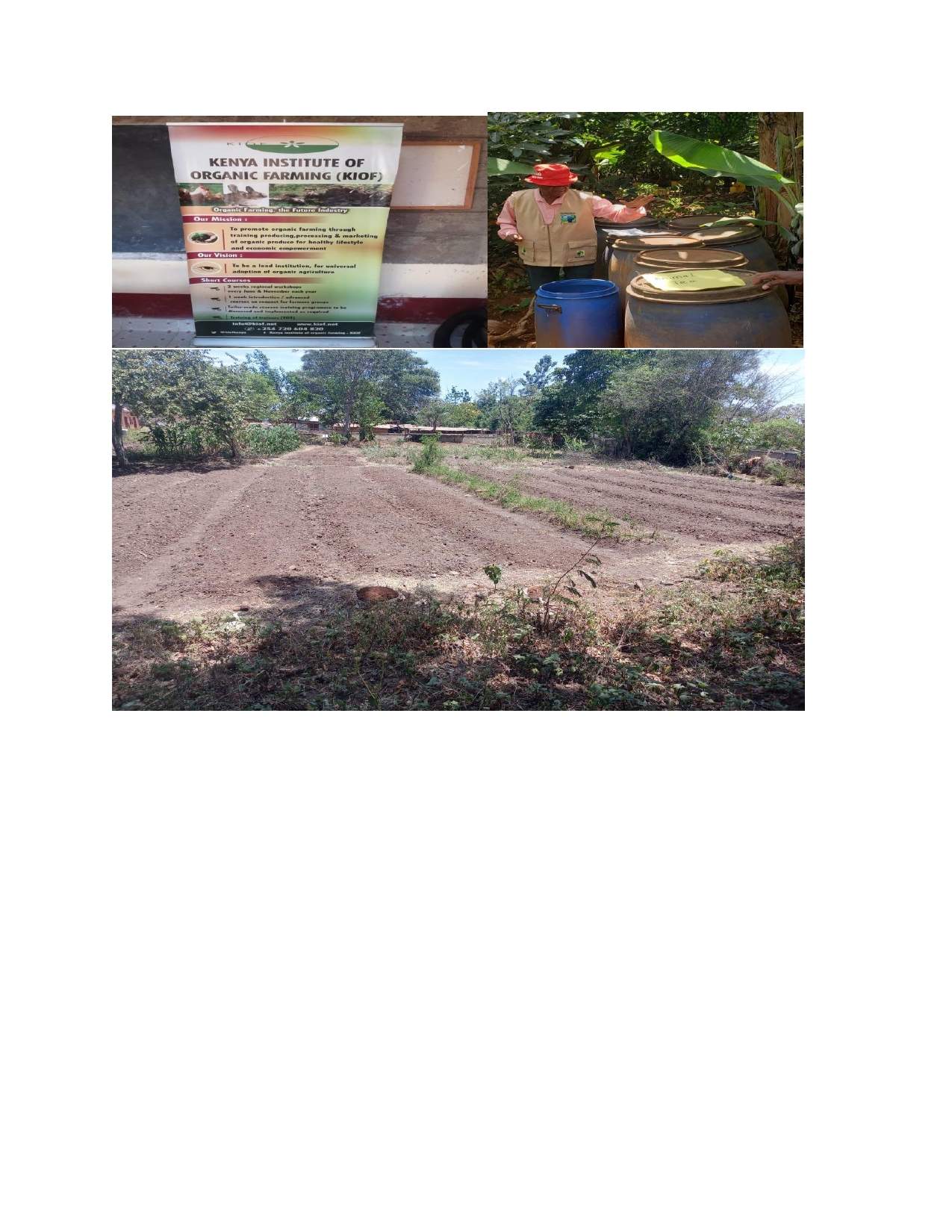
• The Kenya Institute of Organic Farming (KIOF) is an officially registered technical training institution NO. MOHEST/PC/1361 and Non-Governmental organization (NGO). It is situated in Juja off – Thika highway, near Ndarugo Motel. KIOF launched its first activities in 1987 – The Farmers Training and Extension Programme, which aimed at bringing the awareness of the challenges associated with conventional chemical farming (fertilizers and pesticides)
• The advantages of environmentally – sound-farming methods, appropriate to small-scale farmers led to widespread public interest in the program. Numerous requests were received from development organizations in Eastern Africa for training in organic farming.
• After the initial strong growth, KIOF found that there was necessity to verifying some of the organic methods adopted by farmers. KIOF therefore started looking into opportunities for on-farm trials and research to supply relevant back up data.
• A Program to incorporate youth training in organic agriculture was launched in 1995. This led to an Organic Agriculture Certificate course with the aim of assisting the youth to develop careers in Organic farming. A diploma program was launched in 2004 and the Certificate Stream gradually phased out.
• The Diploma Program takes 2 years of theoretical and practical learning. Due to the growing interest in this field and high demand for profession knowledge in organic agriculture, KIOF launched a 2-year Distance Learning Diploma program in 2006
A RENEWED APPROACH TO AGRICULTURE AND THE ENVIRONMENT
• Organic farms and gardens have been operating years in many countries and climates. By reviving and developing sound husbandry practices, they have shown that it is possible to combine good yields with high quality produce, lasting soil fertility and improved overall environment.
• The Kenya Institute of Organic Farming (KIOF) aims at making this experience available to all farmers and other stakeholders.
• KIOF connects itself especially with the small – scale farmers who make up the majority of the farming community in Kenya. It is the small – scale farmers who are, in effect, the caretakers of the natural environment. KIOF wants to stimulate better management of the environment by starting with sound agricultural principles on the farm.
• KIOF organizes training sessions for groups of farmers: women groups, youth and other CBOs in the rural areas. KIOF comes into contact with these groups through various organizations, churches, government institutions and individuals.
🏠 Accommodation on site
• The host community will provide a house to accommodate the volunteers with basic living conditions.
• Volunteers should climb down to the level of the local people for exposure to development challenges.
• There is electricity connection at the project but volunteers can charge their electrical appliances.
🍲 Food
• KVDA will provide foodstuffs and volunteers will cook their own meals in turns. Water is available from the boreholes and drinking water should be boiled or medicated. Mineral water available at supermarkets is recommended.
The volunteers will share the food eaten by the staff and students community and this is a mixture of traditional and non traditional foodstuffs to include maize, beans, vegetables, rice, milk, bread and ugali.
📍 About the location
The Kenya Institute of Organic Farming (KIOF) is an officially registered technical training institution NO. MOHEST/PC/1361 and Non-Governmental organization (NGO). It is situated in Juja off – Thika highway, near Ndarugo Motel. KIOF launched its first activities in 1987 – The Farmers Training and Extension Programme, which aimed at bringing the awareness of the challenges associated with conventional chemical farming (fertilizers and pesticides)
🎒 Leisure activities
Volunteers can visit the legendary Mount Kenya, Nairobi national Park, giraffe centre, among other spectacular sites of interest.
⚠️ Requirements
What to carry?
This is outlined in the detailed info sheet and includes, sleeping bag and mat, toiletries, torch/flashlight, sandals, mosquito net, national flag from your country, among others
DONATION AND GIFTS:
These are usually symbolic gestures to enhance the solidarity of volunteers and the hosting community. Kindly contact KVDA for details in case you are willing to support a worthy cause in the community either by offering a donation or long-term intervention on the project.
🤝 Meeting point
• This will be done subject to provision of full flight details.
• The port of entry to Kenya is Jomo Kenyatta International Airport in Nairobi.
ℹ️ Additional information
• Furthermore, we invite you to bring typical food, spices, drinks, games and music from your country (for an intercultural evening) – and a lot of motivation!
EDUCATIONAL TOURS
KVDA offers educational tours to spectacular sites including the renowned Maasai Mara Game Reserve at separate fees. Please contact us for specific tour information.
THEME: WHY ORGANIC AGRICULTURE?
• A problem in today’s agriculture is the need for cash. This need moves the nation as a whole and especially the farmer into cash crop farming.
• Most of which are non – food crops.
• The family food production is often neglected. This leads to poorer diets and poorer health of the farming community. The remedy for this situation is organic farming.
ORGANIC PRINCIPLES
• Organic farming is based on mixed farming principles. Experiences show that mixed farming practices lead to better food and income stability. It does not exclude the cash crop but it puts it in the right place. The cash crop can become part of the farm’s crop rotation, which puts emphasis on diversity of crops thereby raising the ecological balance of the farm. It provides a more complete diet for the family. Diversity in production means less risk, and better food and health within the farm.
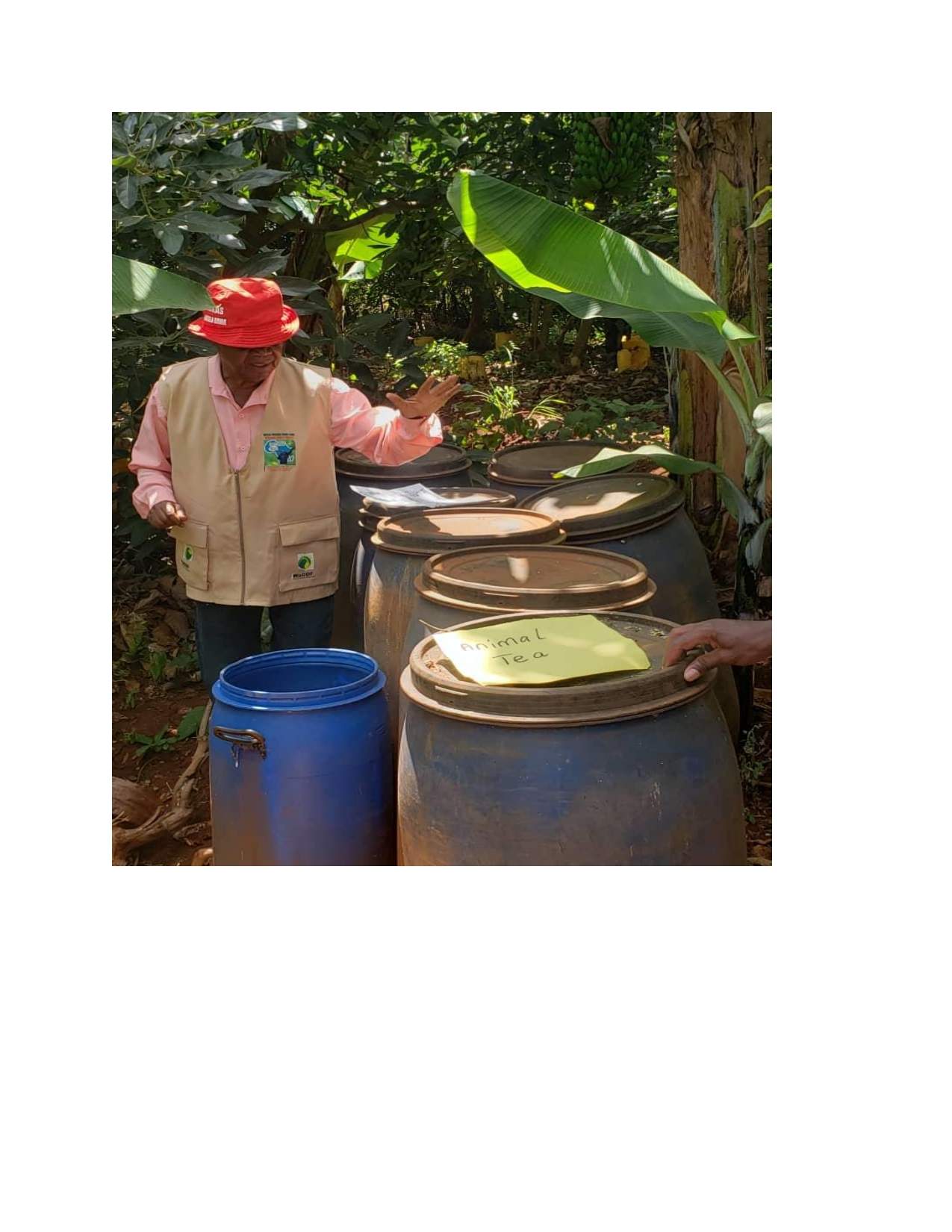
• Production is based on maximum recycling of organic wastes and careful handling of manures and composts, careful soil cultivation and use of natural rock minerals, if necessary.
• Weed control is based on crop rotation and physical methods. Pests and disease control is sustained by understanding and maintaining physical, biological and ecological balances. These include traditional methods which are now being scientifically proven.
• The use of trees for shade, mulching, soil improvement, fruit, fodder and fuel production is of great importance, and correct understanding of their place on the farm is part of organic practice. Besides, trees protect the land from strong winds and improve the climate of the area.
• A fresh look is taken at the question of marketing. This is done with a view to improved understanding of the needs of the grower and the requirements of the consumer.
• Thinking in terms of organic agriculture means reviving and developing sound husbandry practices that include the human and the social surroundings of the farm. The farm is able to function as an organism in which all parts support each other.
Interested in this project? Create your account and apply online.
Sign in to apply📷 Project photos
📅 Available sessions
Organic Farming
15/02/2025 at 00:00 → 28/02/2025 at 00:00
ℹ️ Key information
Age required
18–99 years old
Solidarity donation
300.00 EUR
French tax residents may be eligible for a tax reduction of up to 66% of their costs (membership, plane tickets, solidarity donation).
📍 Location
Thika, Kenya
Kenya
🌍 Location info
Local currency
Kenyan Shilling (KES / KSh)
Exchange rate
1 KES = 0.006892 EUR
Rate as of 31/05/2026
Timezone
East Africa Time
Local time: 22:10 (12/11/2026)
🛡️ Before you leave
✅ Features
🏠 Accommodation
🗣️ Languages spoken