📝 Detailed information
🏢 About the local organisation
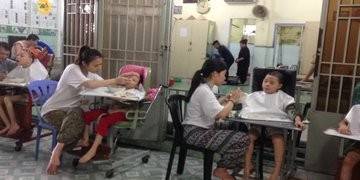
Ky Quang Pagoda was built in the early part of the 20th Century in 1924 and is relatively famous in Ho Chi Minh City. The pagoda is now a place of charity for unlucky children and a traditional medicine clinic for local residents. The Pagoda Orphanage was founded and is run by the Bonze Thich Thien Nhan’. It has 25 staff members who stay at the Pagoda to take care and bring up these orphans. The operation funding mainly comes from local benefactors, social organizations and international volunteers and visitors. The children here have unfortunate backgrounds; many have been abandoned by their parents and relatives, babies are often found at the front gate of the pagoda and then taken in. Sometimes, the head monk receives phone calls from hospitals requesting him to take in deserted babies amongst other situations. At the moment, about 200 children and adults are living in the Pagoda, their ages ranging from 5 days old to 40 years old. There is a day care-room that includes 35 disabled children at this moment suffering in particular from cerebral palsy, blindness or Down’s syndrome. Here, they are fed with lunch and dinner, are interacted and played with, sleep and receive some basic therapy during the day. In the evening and night, they sleep in different rooms with other orphaned children with a mother figure who looks after them.
💼 What the programme involves
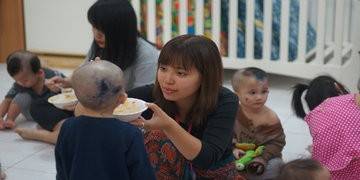
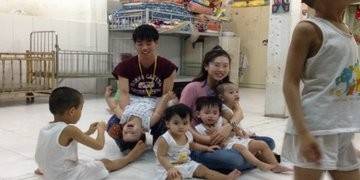
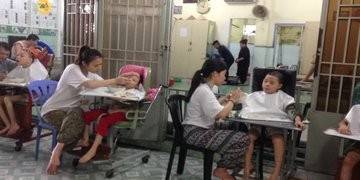
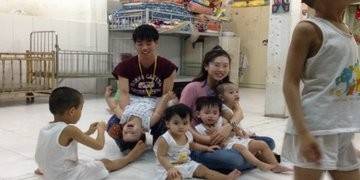
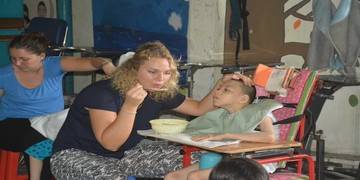
Volunteers will spend most of their time in the day-care room working with disabled children. At the project, you will take on two main roles, as a volunteer you will essentially be working as another member of local staff and as such must act accordingly. On the other hand, you are also there to care for and be a friend of the children. When working with the local staff you will be required to assist them in providing basic rehabilitation exercises and therapy treatment for children. The staff will guide you and help you understand the need of each individual child. Staff are always willing to learn new techniques or methods in therapy, if volunteers have a background in therapy work, they can spend time with local staff to offer some basic training and information. Back in the day-care room, one of the most important tasks is mealtimes when volunteers are expected to support local staff in feeding children who are unable to manage themselves. While this can at first seem somewhat overwhelming, you will feel more comfortable as you settle and understand the support needed due to a lack of local staff. The local staff will assign you to feed the easier children while they are in charge of the more difficult ones. As you become more familiar you will be expected to learn how to feed all the children. Quite different to the former, you will also help in practical activities such as preparing the room for lunch or naptime, cleaning and any other jobs required of you. When caring for the children, you will soon realise that despite their disabilities they are simply regular children who want to play and have fun as much as any other child does! Volunteers are encouraged to share their love and enthusiasm through playing and educating with games, music and arts. Group activities with the children through songs or games always have a positive impact on interaction development. You are free to use the materials and toys there or bring your own. Drawing & painting is good for them, as well as simple puzzles or building blocks. Anything constructive is useful for them, as well as fun. While playing and interacting with the children volunteers must set a positive example and remember to be firm with misbehaviour to help them understand what is right and wrong. The timetable will be given on arrival with volunteers working 5 days a week (Saturday and Sunday off). Working hours from 8:30am to 11:30am, and again from 2:00pm to 5:00pm with a lunch break and time to rest in between. Volunteers will work 20 hours per week on average.
🏠 Accommodation on site
HOST SITUATION Volunteers will stay in a dormitory, sharing rooms with volunteers of other nationalities joining the same program. Normally, rooms are arranged with about 1-4 volunteers per room. In the busy time, the maximum number can be either 8 or 5 volunteers per room in five or three bunk beds respectively. Western toilets and showers are available. Air-conditioner at night time (10 PM- 7 AM). The house has TV, PC with WIFI, washing machine, fridge, cooking facilities and a common room. Breakfast, lunch & dinner are provided at the dorm. Food is local style, cooked by a Vietnamese cook. The main types of food will be rice, meat, fish and vegetables. For vegetarians the choice is usually limited to rice, bread, vegetables, egg & tofu. During the working day volunteers will stay at the project site to have lunch and take a rest.
📍 About the location
Ho Chi Minh city. Staff member will support for weekend trips to volunteers.
ℹ️ Additional information
The fee is 270 EUR for first 2 weeks, 360 EUR for first month and 290 Eur for second month