📝 Detailed information
🏢 About the local organisation
Created in 1957, the NGO Association Togolaise des Volontaires au Travail (ASTOVOT) is one of the first Togolese associations. Laic and non-profit-making, ASTOVOT has been supporting international solidarity initiatives for several decades, but also the self-promotion of rural communities through local development projects. Today, it remains a great reference in terms of international volunteering and civic service in Togo. Every year, the NGO ASTOVOT welcomes several dozen international volunteers from European countries (Germany, Belgium, France, Switzerland, Spain, Luxembourg...) and also from Asia (Japan) thanks to its partnership with several organisations working in the field of international volunteering and civic service. The aim of the association is to :
Contribute to the animation of life through the participation of Togolese and foreign volunteers in the realization of works of general interest ;
To improve the living conditions of the local population by promoting their development and well-being by safeguarding the environment and the socio-cultural heritage;
To support socio-educational and sports initiatives in rural communities;
To promote the movement of people and goods through international and intercultural exchanges.
Since its creation, the association has carried out numerous projects in its areas of intervention in the logic of a participatory approach with local communities. The projects carried out include: construction of classrooms, eco-sanitary latrines and libraries; renovation of school and sanitary buildings; awareness-raising workshops on several themes of education, citizenship, hygiene and health; training in youth entrepreneurship and agroecology, etc.
💼 What the programme involves
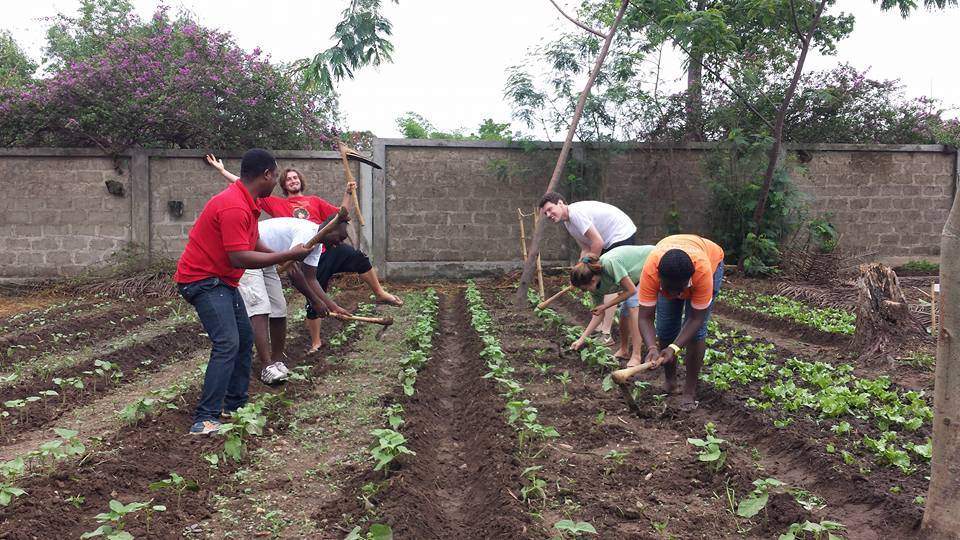
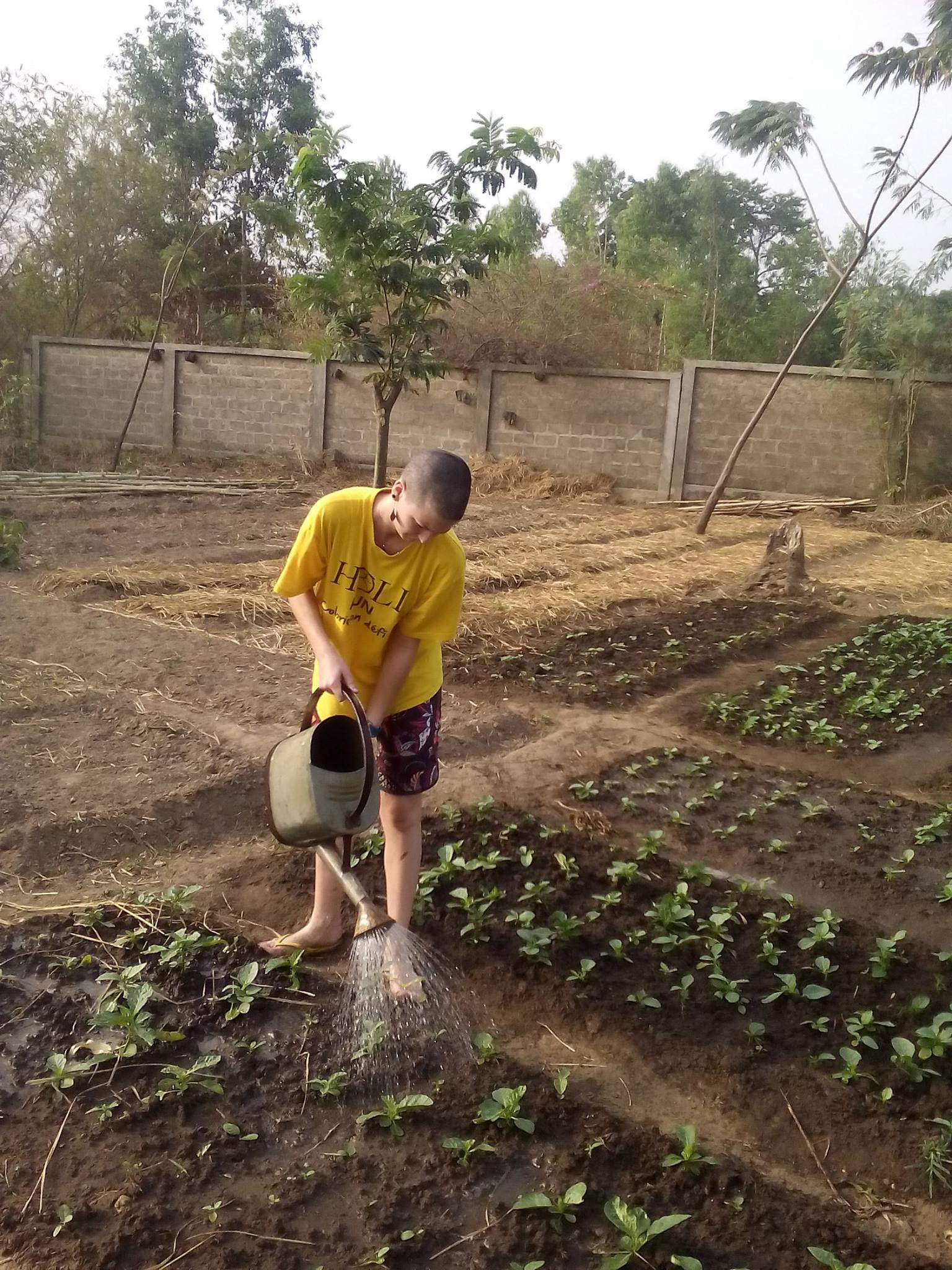
“Learning Agroecology” is a project initiated by Astovot in recent years to learn how to cultivate differently and to safeguard biodiversity. This is the operation of an agro-ecological plot where a wide variety of organic vegetables are grown for local consumption. This project has two components: the first component is the organic vegetable production and the second is the eco-management awareness and agroecology training. In setting up this project, Astovot plans to focus on the essencial subjets of agroecology: manual agricultural techniques, respectful of fauna and flora (without chemical products, with vegetation cover, combining plants and vegetables, etc.) so as to enrich the biodiversity of the site and the fertility of the soil. Thus, this project is also intended to be a platform for the exchange of skills, experimentation and promotion of organic crops between local and international volunteers.
The agro-ecological garden is located in an environment rich in biodiversity and vegetation, with a small river next to it that allows the watering of the plots.
PROJECT OBJECTIVES
- To preserve the site's biodiversity.
- To promote the cultivation of organic products (vegetables and fruits) through agroecology.
- To promote educational exchanges on agroecology and other practices for a more responsible agriculture.
MAIN ACTIVITIES
Clearing and weeding.
Preparation of soil and seedlings, plowing, hoeing.
Compost manufacturing.
Seedlings protection (shading), transplanting of young plants, watering of seedlings of various cultivated vegetables.
Reinforcing the garden fence.
Construction of a shed in straw and bamboo for the storage and conservation of tools and products.
Organization of educational activities with the children in the garden.
🏠 Accommodation on site
ACCOMODATION
Housing conditions are generally rudimentary, simple and specific to the location of the project. On site, volunteers are accommodated in groups of three or four people per room. The distribution per room depends on the collective organization of the volunteers themselves. Depending on the location, volunteers can use dry toilets and showers without tap water. The association available to volunteers some plastic or foam mats. Volunteers can bring sleeping bags with them if possible. There is access to drinking water on the site. However, access to electricity and the internet may be limited. This is due respectively to the blackouts and the difficulties of accessing the Internet.
FOOD
During the entire period of the workcamp, it is the volunteers themselves who prepare their own meals. An internal organization will make it possible to create groups which will alternate to take care of the different household tasks including cooking. Food products used for cooking are both imported and local, and sometimes organic. The diet of each volunteer will be taken into account in the preparation of meals. Volunteers will have access to tropical fruits such as bananas, oranges, pineapples, mangoes, avocados, papayas, etc.
📍 About the location
LEISURE
In addition to the main activities of the site, several other activities are organized such as discovery walks, hikes, parties or cultural meetings. These activities allow volunteers to get in touch with local populations but also to discover Togolese culture.
During the weekends, collective excursions are organized by the volunteers and their leaders to discover the tourist sites of the region where the workcamp is taking place. It should be noted that expenses related to excursions and outings of volunteers are not included in the participation fees. However, the association can facilitate or negotiate transport for volunteers during outings or excursions.
⚠️ Requirements
SPECIFIC INFORMATIONS
Volunteers interested in this project can bring seeds that are favourable to the tropical climate and articles or documents for agroecological production.