📝 Detailed information
🏢 About the local organisation
The history of Open Houses dates back to the mid-1980s, when a group of young people began to restore actual disused village churches. The focus lies on restoration and public use of historical monuments, which allows a long-lasting and effective recovery of the buildings. Currently Open Houses has several historic buildings in its care. All of them are attractive ensembles which display centuries of history. But most of them stood vacant for a very long time and suffered serious structural damage.
In accordance to the above described focus on heritage, European Heritage Volunteers, a branch of Open Houses, organises Heritage Volunteers Projects, some of them in the framework of the World Heritage Volunteers initiative. European Heritage Volunteers has been active in heritage-related volunteering for more than twenty years. Its objective is to establish links between the fields of heritage and volunteering by continuously working to foster a deeper understanding of heritage and volunteering among those active in either field, and by linking the two fields through practical hands-on projects and educational activities.
💼 What the programme involves
The project consists of two parts – a practical working part which will last 6 hours per day and a study part, which takes place in the evenings and during weekends
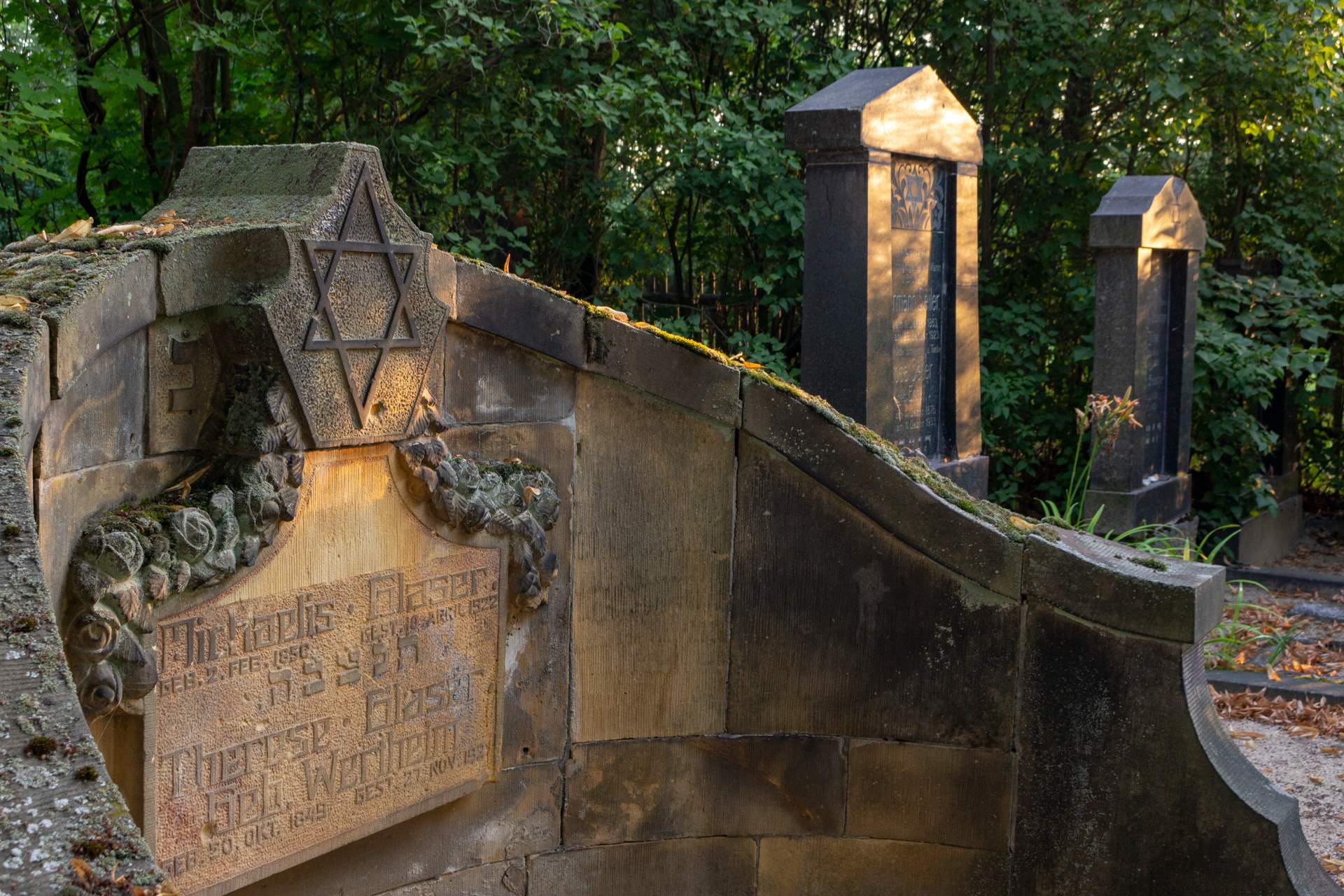
The project will focus on new forms of exploring and mediating the Jewish cemetery of Zittau as one of the last authentic sites of Jewish cultural heritage in the region. Using digital tools and methods of heritage interpretation, the participants will collaboratively create a virtual tour of the cemetery, providing information about the people, places, personal stories and historical events connected to it. The content of the virtual tour will afterwards be used by local educators to engage more and different people in the topic.
In this project, methods of heritage interpretation shall be used to understand and interpret the Jewish cemetery in Zittau. The aim is to develop the historic site into a space where Jewish life, death, and heritage in the region can be comprehended in a relatable way, on-site as well as on-line. After an introduction to the relevant historical sources and materials, the participants will get basic training of working with heritage interpretation, interpretive planning, and interpretive media. They will work in small teams, each focusing on one specific aspect of the heritage site.
The work will be accompanied by a cultural and educational program. The participants will visit other Jewish heritage sites in Görlitz in Germany, Liberec in Czechia and Sieniawka in Poland. They will learn about the cultural specifics of the border region of Germany, Poland, and Czechia. The participants would also have the opportunity to interact with locals, talk to them about their work and ask questions. There will also be an exchange with young members of the Jewish community Dresden on Jewish life in Germany today.
🏠 Accommodation on site
All costs linked to the project are covered, including food, accommodation, insurance and transportation during the stay at the project. Travel costs to and from the camp place are not covered. Participants should organise their journey to and from the project place by themselves and on their own expenses. Furthermore, participants should bring their own pocket money.
ACCOMMODATION
In most of the Heritage Volunteers Projects the accommodation is located in a certain distance to the working site. The accommodation is usually very simple; there are shared rooms with simple beds or mattresses at most of the places. Shower, toilet and kitchen are at the place, but sometimes not in the same building. The equipment is simple but fair. After work, when everybody wants to take a shower, there can be a limit of hot water.
FOOD
The meals will be prepared together as they are part of the community life, what means that every participant will be responsible for the meal at least once during its stay.
📍 About the location
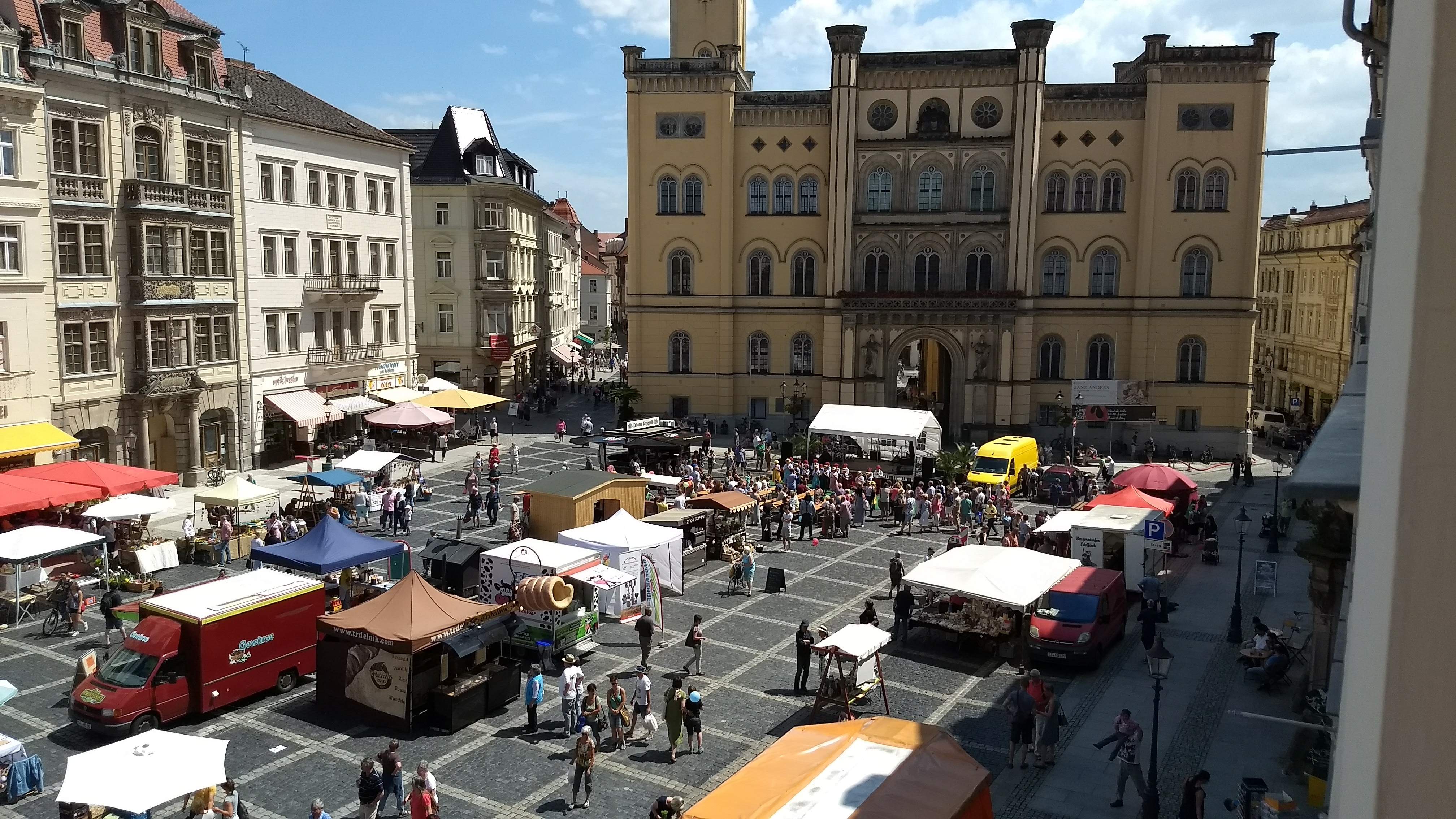
Zittau is a small town with a beautiful historic centre, located in the easternmost part of Germany, in what is now the German-Polish-Czech border. Historically speaking, these borders are all relatively young, as they were established only after World War II, and the states bordering each other have only existed in their current form since 1990 (Federal Republic of Germany and Poland) resp. 1993 (Czechia). In the collective memory, the recentness of the current situation is still quite present, i.e. through family biographies marked by expulsion, forced displacement and exile.
The European Heritage Volunteers Project will be dealing with a special aspect of these historical shifts and ruptures: the history of the Jewish people in the region. While records of Jewish life go back to the Middle ages, it was not until the 1871 that the Jews were granted civil rights in Zittau, such as the right to buy real estate or the right to permanent settlement, and in 1885 a Jewish community was officially founded. The cemetery was inaugurated in 1887, with the mayor and other town representatives present. This hints at the rapid integration of Jewish people into the Zittau society. In the following decades, the Jewish population grew from about 60 to almost 200 people.
However, anti-Semitism was always a threat, with major outbursts already in the 1890’s and its violent culmination in the extermination policy under the Nazis after 1933. More and more Jewish families left the city, seeking refuge in bigger cities or fleeing the country. Of those who stayed, only very few survived the Holocaust. Thus, only a handful of burials took place at the Zittau Jewish cemetery after 1933. The neoclassical mourning hall that had been built on the cemetery only 30 years earlier was demolished in the November pogroms of 1938. After the end of World War II, there was a short period of active remembrance, followed by decades of neglect and deliberate destruction of the Jewish cultural heritage.
Even after 1990, the Jewish cemetery was repeatedly desecrated, the last act of vandalism being recorded in 2003. This event represented a wake-up call to the active citizens of Zittau, showing that something had to be done to protect the cemetery and prevent anti-Semitic attacks in the future.
Since then, Hillersche Villa, which is a socio-cultural centre founded in the early 1990’s, together with volunteers and the municipality, has been working on the documentation and restoration of the Jewish cemetery. Their aim is to enhance its visibility and to raise awareness of Zittau’s Jewish history through guided tours and educational programs. In 2013 and 2016, they organised two archaeological excavations on the cemetery, with researchers and volunteers working together. These brought to light the foundations and pieces of decoration of the destroyed mourning hall. All these activities are coordinated with the Jewish community of Dresden, who is the owner of the cemetery since there is no Jewish community in Zittau anymore.
⚠️ Requirements
Motivation letter related to the project
and CV + photo required
Interview of candidate prior to acceptance via Skype
ℹ️ Additional information
Motivation letter related to the project
and CV + photo required
Interview of candidate prior to acceptance via Skype