📝 Detailed information
🏢 About the local organisation
Open Houses – rooms open for those who come along.
Open Houses – not empty buildings, but places with visible and invisible traces of history, places which have grown and decayed over the centuries, places which were shaped by those people who lived there long ago as well those who left only yesterday – places which will be shaped by those who live there or who come as a guest.
Open Houses – rooms which want to be filled with dreams and ideas, with meetings and exchange, by people of different backgrounds, different cultures, different generations and different ideas and visions.
The history of Open Houses Network dates back to the mid-1980s, when a group of young people started to restore village churches in East Germany in voluntary work to protect them from decay. The engagement for these buildings united people who enjoyed the freedom these activities provided and who filled these rooms with life again in ways which by far exceed the craftsmen's work done – through exhibitions, concerts, making music together or just sitting by the camp fire.
Meanwhile, rooms free of political and ideological pressure are no longer urgently required; however, places have become rare where people can meet without commercial pressure, free of bureaucracy and institutionalism, free of nepotism and the exclusion which it produces. What should be easy – to go somewhere in order to meet people and to work together – has become difficult. The tightrope walk between, on the one hand, public activities in a monetary and functional sense, and the retreat into private life on the other, is very difficult, and it requires a lot of power and permanent efforts to tackle red tape and financial restrictions.
Free spaces are less and less understood as common property, and are permanently being cut back. The idea of public property seems to have gone out of fashion, and places of common responsible work have become rare.
Open Houses Network tries to create and protect such spaces. In this process, we do not want to be the doers, but be people who have a vision, who want to initiate something, but who also are aware of depending on the co-operation of others. We understand our projects and events as offers – as offers to create space for commitment, for changes, for meetings.
💼 What the programme involves
Organising and leading an international Workcamp is an interesting challenge for those who enjoy working together with young people from all over the world, which are willing to take over a big responsibility and who look forward to a great summer in Germany. The camp leader's role lies in building a bridge between the participants of the Workcamp, the organisation as well as the technical leaders who guide the practical part of the camp. S/he supports the group of volunteers from a social and intercultural point of view. Open Houses is looking for people who are highly motivated and responsible, open minded and which already have some experiences in handling with other people. The main tasks are to organise the social life for all volunteers during the camp period. The leader will welcome the volunteers and make them familiar with the camp site. S/he will prepare the daily schedule, indicating the working and eating times including breaks and will furthermore be responsible for organising the cleaning and cooking teams, alternating within the group. The camp leader will buy the food for the group, having an eye on the everyday changing cooking teams with their individual dishes. Additionally, s/he organises leisure activities after the working days and is welcome to prepare campfires, barbecues, games or other group activities. For the weekends the camp leader should be ready to plan little trips to bigger cities nearby or other activities. A camp leader has rarely time for personal things during the Workcamp. S/he is always the person in charge of everything and contact person in any questions and needs of the volunteers. This should be clear to all applicants.
It is also important that the camp leader stays in close contact to the technical leaders, who are organising the working groups and know which work has to be done. It is helpful to support the technical leaders by taking over the responsibility for a working group, if there are no other works to be done for the camp leader. At some camps, especially in environmental camps, it can happen that the functions of camp and technical leaders are running more together. So it is good to be prepared also to organise a little bit the working part.
The camp leader is also responsible for managing the deduction and finances of the camp and to take care of the documentation – writing down what has been done, taking pictures and leading the evaluation of the camp. It is important to do this documentation with a certain care, so that the camp leader which will lead the following camp will know what happened in the past and doesn't need to look for the same information or to do the same mistake a second time.
Project Description
The camp leader has to be able to work independently as well as in a team. Since most of the camps are organised by several camp leaders (one or two and one or more technical leaders) it is necessary to agree upon several issues in a team. All in all, leading a camp means a lot of work and empathy as well as a lot of fun. Open Houses gives the camp leaders the opportunity to be creative and to take over responsibility for their own work. Of course, they will not be left alone in their role. Before getting active as a camp leader s/he will take part in one camp as a volunteer, parallel to the introduction as camp leader. It will be a good experience to be an “ordinary participant“ for one or two weeks and to get to know the camp leader's tasks from the participants' point of view. After experiencing the atmosphere of the first camp and after Open Houses and the potential camp leader have gotten to know each other better, Open Houses will decide if s/he will be able to lead camps or not or if s/he would need an additional introduction time. During the summer season Open Houses organises a lot of Workcamps in different places in Germany. Depending on the camp leader's interests and abilities Open Houses and the potential camp leader will decide together where s/he will lead camps. In general, Open Houses offers two possibilities: The volunteers can lead several successive camps in one place (at Lohra Castle) or can lead different camps at various places. For each camp leading of two weeks the volunteer receives a 150 € allowance. S/he does not have to pay for food and accommodation. The camp leader will receive the allowance after the camp, when all the camp documents will be checked by the office staff and everything will be fine. After two or three camps, is highly recommended that the volunteer takes a break. S/he can stay as a participant in a project. In that case, the food, accommodation and insurance is covered but the volunteer will not receive allowance
🏠 Accommodation on site
FINANCES
All costs linked to the project are covered, including food, accommodation, insurance and transportation during the stay at the project. Travel costs to and from the camp place are not covered. Participants should organise their journey to and from the project place by themselves and on their own expenses. Furthermore, participants should bring their own pocket money.
FOOD
The meals will be prepared together as they are part of the community life, what means that every participant will be responsible for the meal at least once during its stay. So it would be very nice if the participants could bring typical recipes from home in order to introduce each other to the preparation of food from all over the world.
ACCOMMODATION
In most of Open Houses' camps the volunteers will live at the same places they also work on, what means that they live more or less on a building site. In most of the Heritage Volunteers Projects the accommodation is located in a certain distance to the working site. The accommodation is usually very simple; there are shared rooms with simple beds or mattresses at most of the places. Shower, toilet and kitchen are at the place, but sometimes not in the same building. The equipment is simple but fair. After work, when everybody wants to take a shower, there can be a limit of hot water.
📍 About the location
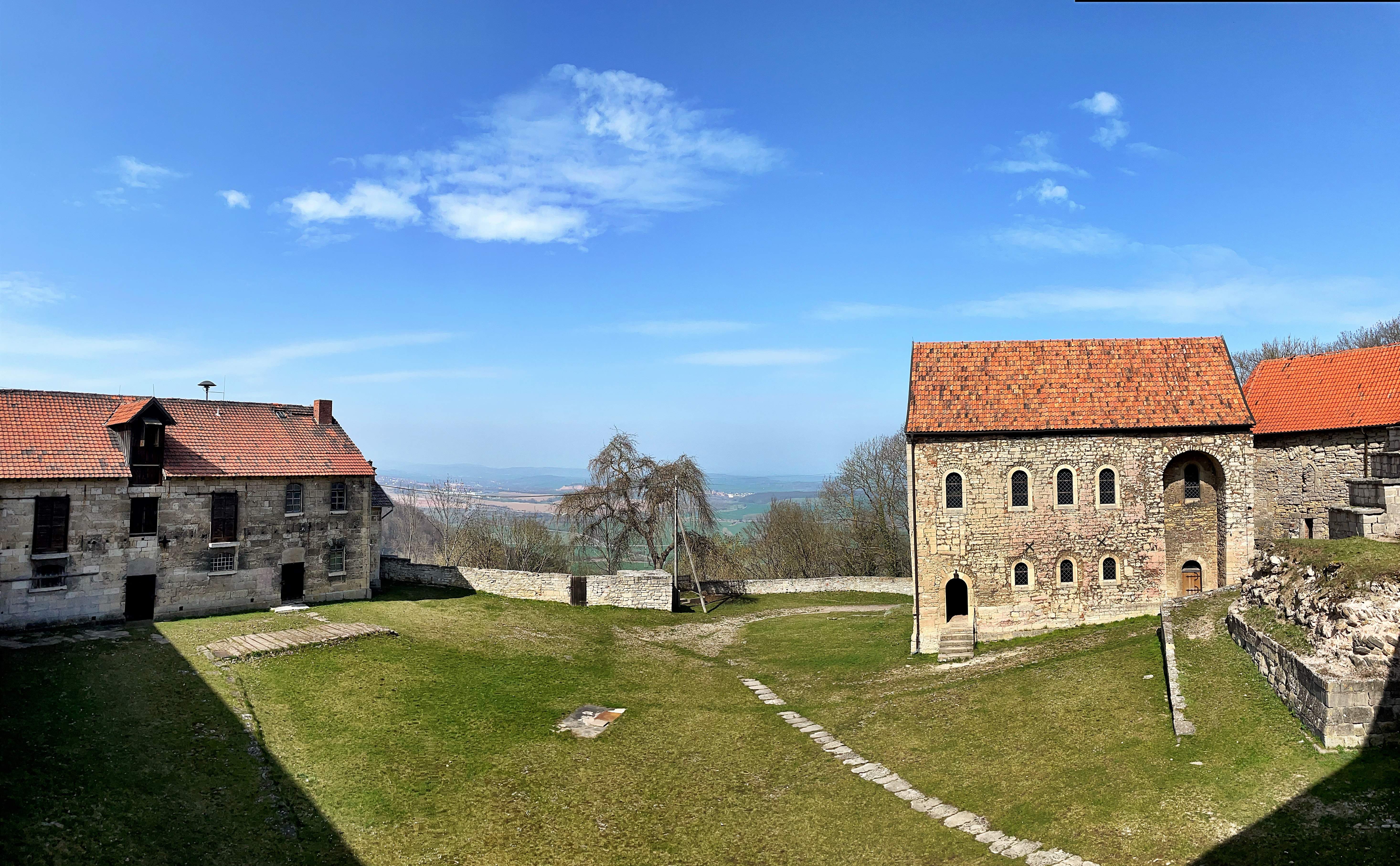
Lohra Castle is situated in the heart of Germany in Northern Thuringia. The castle, which is surrounded by a scenic hilly landscape, is located on the edge of a nature reserve area. Being one of the largest castles in Thuringia, the history of the castle Lohra begins in the Middle Age. The castle is more than 1,000 years old. Today, it includes twenty buildings from different times: medieval fortifications, remnants of a tower from the 11th century, a Romanesque chapel, a manor house from the Renaissance period as well as stables and granaries from the 19th and the early 20th centuries. The ensemble is situated in the centre of a beautiful forest. For years Lohra Castle was vacant. In the 1990s Open Houses started to restore the castle and to revive it by cultural activities. Since that time, a large number of Workcamps, Building Weeks, exhibitions, concerts and other activities with international participants took place in the castle.
⚠️ Requirements
basic German is preferrable but not mandatory
good English
CV + photo
project-related motivation letter
Valid drivers license would be preferrable but not mandatory (to drive a small car to the village to buy groceries)
ℹ️ Additional information
*The camp/ technical leader can apply for longer or less than the dates mentioned (consultation with Incoming officer).