📝 Detailed information
🏢 About the local organisation
Open Houses – rooms open for those who come along.
Open Houses – not empty buildings, but places with visible and invisible traces of history, places which have grown and decayed over the centuries, places which were shaped by those people who lived there long ago as well those who left only yesterday – places which will be shaped by those who live there or who come as a guest.
Open Houses – rooms which want to be filled with dreams and ideas, with meetings and exchange, by people of different backgrounds, different cultures, different generations and different ideas and visions.
The history of Open Houses Network dates back to the mid-1980s, when a group of young people started to restore village churches in East Germany in voluntary work to protect them from decay. The engagement for these buildings united people who enjoyed the freedom these activities provided and who filled these rooms with life again in ways which by far exceed the craftsmen's work done – through exhibitions, concerts, making music together or just sitting by the camp fire.
Meanwhile, rooms free of political and ideological pressure are no longer urgently required; however, places have become rare where people can meet without commercial pressure, free of bureaucracy and institutionalism, free of nepotism and the exclusion which it produces. What should be easy – to go somewhere in order to meet people and to work together – has become difficult. The tightrope walk between, on the one hand, public activities in a monetary and functional sense, and the retreat into private life on the other, is very difficult, and it requires a lot of power and permanent efforts to tackle red tape and financial restrictions.
Free spaces are less and less understood as common property, and are permanently being cut back. The idea of public property seems to have gone out of fashion, and places of common responsible work have become rare.
Open Houses Network tries to create and protect such spaces. In this process, we do not want to be the doers, but be people who have a vision, who want to initiate something, but who also are aware of depending on the co-operation of others. We understand our projects and events as offers – as offers to create space for commitment, for changes, for meetings.
💼 What the programme involves
The European Heritage Volunteers Project “Parks and Gardens of Classical Weimar“ has been taking place since 2011. The project aims to combine practical interventions to reconstruct and maintain the historic gardens and parks with heritage education and the promotion of the idea of volunteering for heritage.
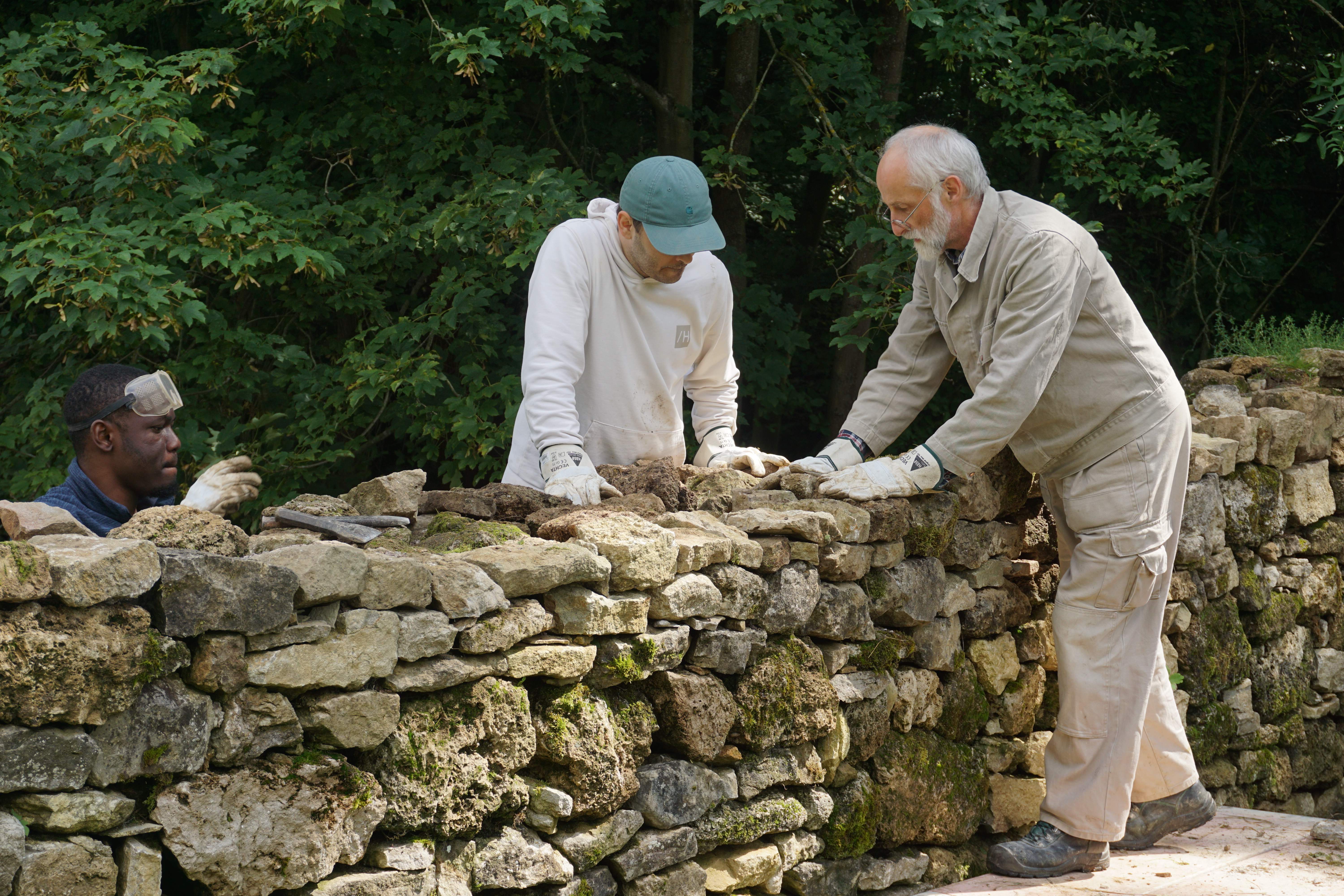
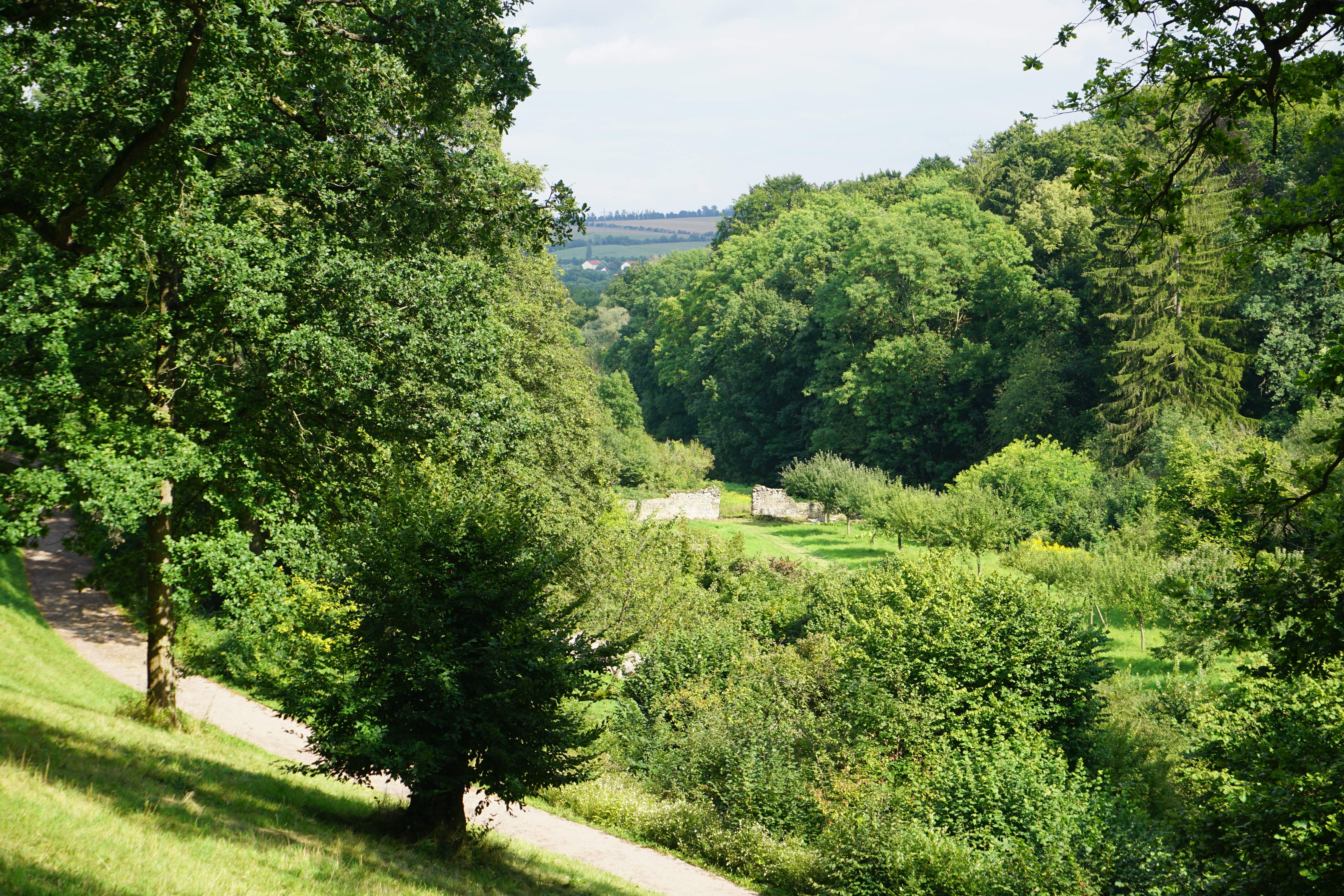
The reconstruction part will take place at the so called "kitchen garden", situated at the southern edge of Belvedere Park. The kitchen garden had been arranged in the 19th century as a combined fruit, vegetable and flower garden. Time has had its hand on this garden, and some of its elements have been lost to nature\'s way. Nonetheless, the traces of the original designs remain. As in the previous years, the project will combine two tasks – the conservation of the dry-stone walls surrounding the garden and the reconstruction of its former path system.
The dry-stone walls as the formative element of the kitchen garden are ruinous and need to be protected against progressive decay. During the previous years the structure has being successively repaired. Within the framework of the 2018 project the first steps have been undertaken, which were advanced in 2019 and 2020; finally in 2021 the works on one of the main walls was completed. The project in 2022 will now continue the works at one of the lateral dry stone walls that contain the hill beside the pathway leading to the kitchen garden. Plants that damage the walls will be carefully taken away, the instable parts of the walls stone by stone deconstructed and later replaced. Since the dry-stone walls are an important habitat for wild bees and other rare insects the interventions need to be carried out extremely carefully. The works will be guided by a stone mason specialised on dry stone walls and traditional masonry techniques, who will provide additional theoretical knowledge in this field.
Another part of the group will continue to reconstruct a stone stairway connecting the kitchen garden with the other parts of Belvedere Park as well as to uncover and reconstruct the pathway which had been leading to the central area of the kitchen garden, where a small fountain used to be located according to historical records. Eventually, the pathway will be uncovered all the way until the dry-stone wall and be restored to complete the narrative of this area of the site.
The participants will have the opportunity to rotate between both groups and thus to become familiar both with the dry-stone wall techniques as well as with the tasks related to garden archaeology and the reconstruction of the path system.
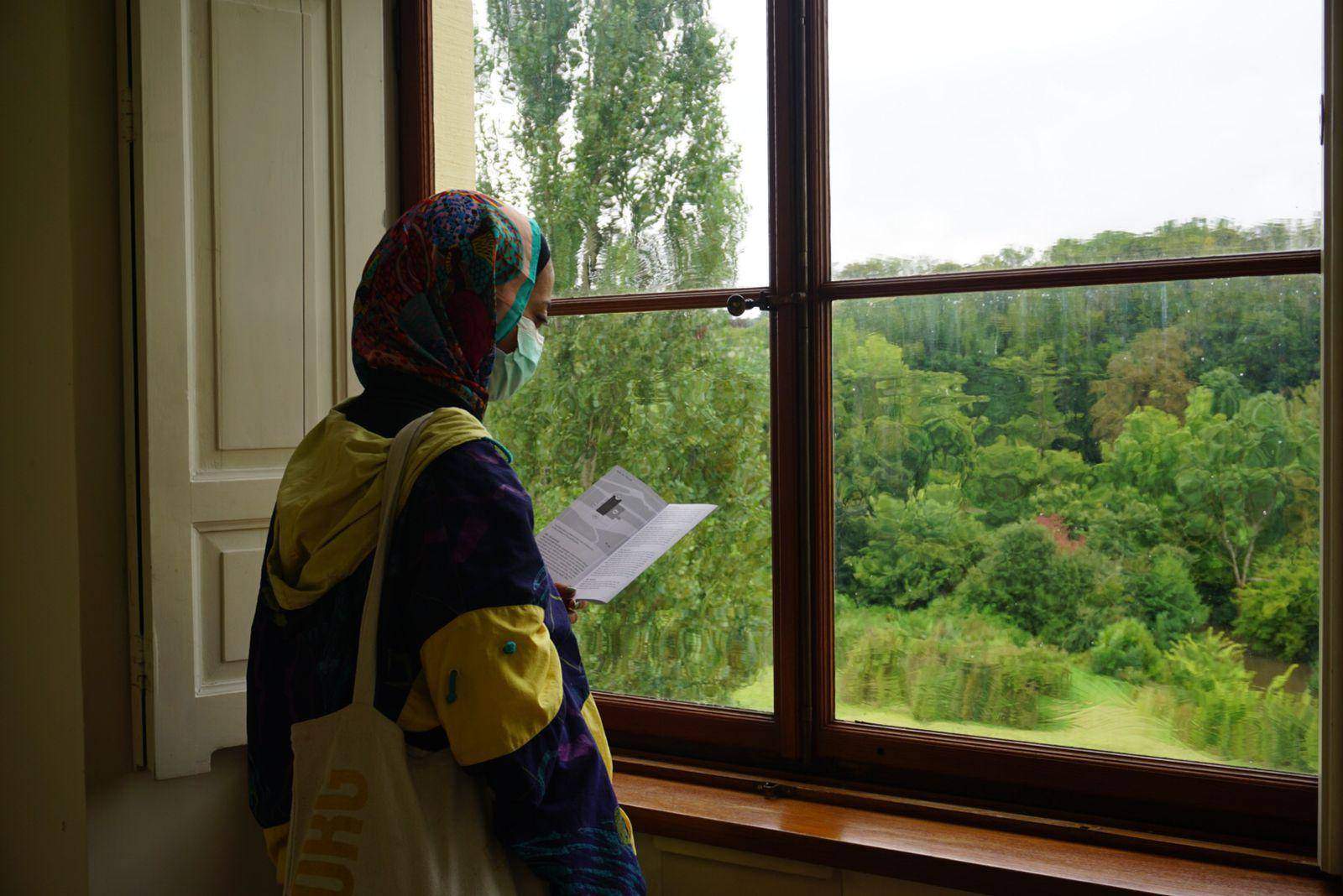
The educational part of the project will inform the participants about the background of the project, while providing knowledge about historical gardens and parks, traditional gardening and other related topics. One of the thematic topics to be discussed are resilience strategies against climate change being implemented on historical gardens in Germany. Additionally, there will be discussions about the UNESCO World Heritage convention system, and through guided tours the participants will be presented with an overview of the site management for the “Classical Weimar“ as a UNESCO World Heritage site. Finally, on weekend a whole-day excursions to other related heritage sites will take place. The opportunity of free entrance to museums and exhibitions will also enable in addition individual study.
🏠 Accommodation on site
FINANCES
All costs linked to the project are covered, including food, accommodation, insurance and transportation during the stay at the project. Travel costs to and from the camp place are not covered. Participants should organise their journey to and from the project place by themselves and on their own expenses. Furthermore, participants should bring their own pocket money.
ACCOMMODATION
In most of Open Houses' camps the volunteers will live at the same places they also work on, what means that they live more or less on a building site. In most of the Heritage Volunteers Projects the accommodation is located in a certain distance to the working site. The accommodation is usually very simple; there are shared rooms with simple beds or mattresses at most of the places. Shower, toilet and kitchen are at the place, but sometimes not in the same building. The equipment is simple but fair. After work, when everybody wants to take a shower, there can be a limit of hot water.
FOOD
The meals will be prepared together as they are part of the community life, what means that every participant will be responsible for the meal at least once during its stay. So it would be very nice if the participants could bring typical recipes from home in order to introduce each other to the preparation of food from all over the world.
📍 About the location
In the late 18th and early 19th centuries the small town of Weimar in Thuringia saw a remarkable cultural flowering. Enlightened ducal patronage attracted many leading German writers, composers and artists to the town, including Johann Wolfgang von Goethe, Friedrich Schiller and Franz Liszt, thus making Weimar the cultural centre of Europe at that time. This development is reflected in the high quality of many of the buildings and parks in the surrounding area.
“Classical Weimar” was added to the list of UNESCO World Heritage sites in 1998, the 20th site in Germany to be recognised as World Heritage. “Classical Weimar” comprises twelve individual buildings and ensembles, all of which portray tangible and intangible elements of Classical Weimar’s cultural heritage. Weimar’s City Castle, the Duchess Anna Amalia Library, Goethe’s and Schiller’s residences, the Town Church, the Ducal Vault with the Historic Cemetery and many others are included on the World Heritage List.
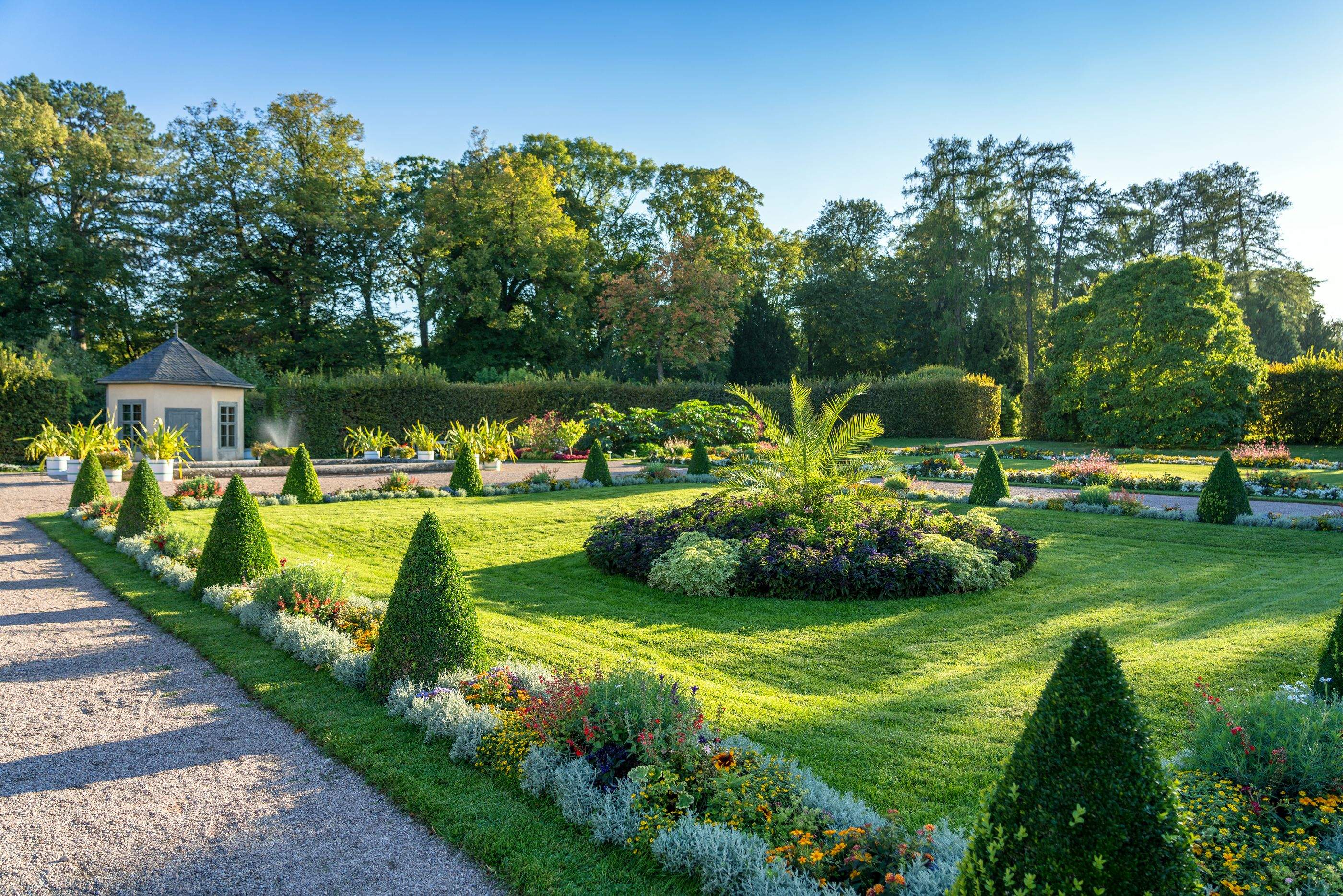
Weimar’s historical parks and gardens connect the historical buildings and their surrounding grounds and are a key feature in the “Classical Weimar” collection: the Park on the Ilm with the Roman House and Goethe’s Garden House, Belvedere Park with its Castle and Orangery, Tiefurt Park and Castle and Ettersburg Park and Castle.
⚠️ Requirements
For application, complete CV + letter of interest on the topic of the project are required prior to being selected for an online interview to define if the candidate will be accepted to join the project.
ℹ️ Additional information
For application, complete CV + letter of interest on the topic of the project are required prior to being selected for an online interview to define if the candidate will be accepted to join the project.