📝 Detailed information
🏢 About the local organisation
The history of Open Houses dates back to the mid-1980s, when a group of young people began to restore actual disused village churches. The focus lies on restoration and public use of historical monuments, which allows a long-lasting and effective recovery of the buildings. Currently Open Houses has several historic buildings in its care. All of them are attractive ensembles which display centuries of history. But most of them stood vacant for a very long time and suffered serious structural damage.
In accordance to the above-described focus on heritage, European Heritage Volunteers, a branch of Open Houses, organises Heritage Volunteers Projects, some of them in the framework of the World Heritage Volunteers initiative. European Heritage Volunteers has been active in heritage-related volunteering for more than twenty years. Its objective is to establish links between the fields of heritage and volunteering by continuously working to foster a deeper understanding of heritage and volunteering among those active in either field, and by linking the two fields through practical hands-on projects and educational activities.
💼 What the programme involves
The project consists of two parts – a practical working part which will last 6 hours per day and a study part, which takes place in the evenings and during weekends
The first task of the volunteers is to help rediscover and recreate a part of the former path system in the "Bath Park" on the German side of the transboundary site. The task will be guided by qualified personnel which will provide an indepth understanding of Pückler’s design and vision.
Additionally a second task involves replanting a historic flower garden in the "Mountain Park" area in accordance with the historic evidence available.
The educational part of the project will inform the volunteers about the background of the site management, provide knowledge about historical garden and park architecture, traditional gardening and other related topics while also gaining knowledge in Climate Change resilience practices in this World Heritage site.
🏠 Accommodation on site
All costs linked to the project are covered, including food, accommodation, insurance and transportation during the stay at the project. Travel costs to and from the camp place are not covered. Participants should organise their journey to and from the project place by themselves and on their own expenses. Furthermore, participants should bring their own pocket money.
ACCOMMODATION
In most of the Heritage Volunteers Projects the accommodation is located in a certain distance to the working site. The accommodation is usually very simple; there are shared rooms with simple beds or mattresses at most of the places. Shower, toilet and kitchen are at the place, but sometimes not in the same building. The equipment is simple but fair. After work, when everybody wants to take a shower, there can be a limit of hot water.
FOOD
The meals will be prepared together as they are part of the community life, what means that every participant will be responsible for the meal at least once during its stay.
📍 About the location
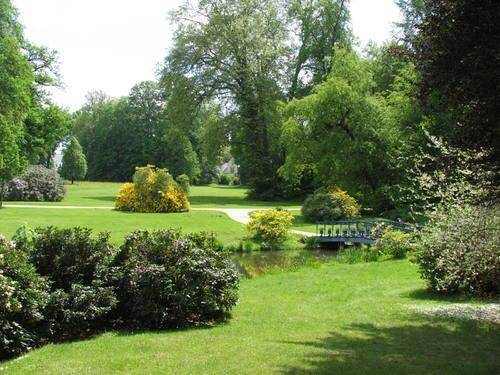
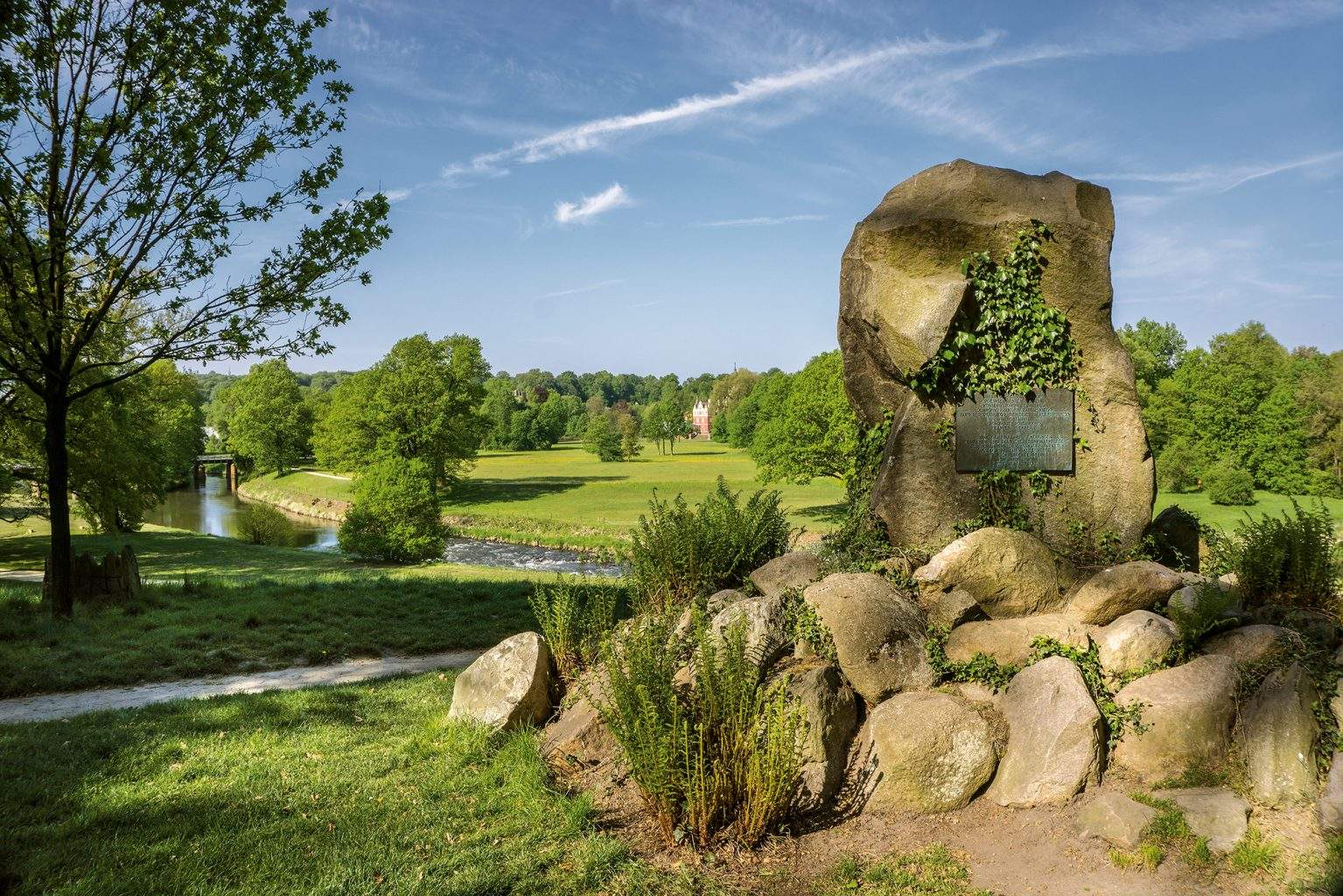
The UNESCO World Heritage site of Muskauer Park / Park Mużakowski is an extensive landscape initially developed between 1815 and 1844 by Prince Hermann von Pückler-Muskau on the grounds of his estate, and continued by his student, Eduard Petzold. Set harmoniously in the river valley of the Lusatian Neisse, the park’s integration into the local town and surrounding agricultural landscapes heralded a new approach to landscape design and contributed to the advancement of landscape architecture as a discipline. The extensive site includes the river Neisse, other water features, human-made and natural, bridges, buildings, forested areas, and paths. It is an example of a cultural landscape in which the site’s natural attributes have been harnessed with the utmost skill.
The park is of the highest aesthetic quality and its composition blends fluidly with the naturally-formed river valley. Its essence is the visual relationship between the central residence, the New Castle, and a series of topographical focal points comprising ideal vantage points laid out along riverside terraces flanking the valley, each of which forms part of a masterfully fashioned network of vistas. Pückler incorporated human-made architectural elements into this network along with natural components, including the terrain’s geological features. It is distinctive with its extraordinary simplicity and expansiveness.
The property encompasses the central portion of this extensive landscape composition measuring 348 ha (136.10 ha in Germany and 211.9 ha in Poland). The remaining part of the composition falls within the surrounding buffer zone of 1,205 ha.
Pückler laid the foundations of integrated landscape design with the extension of the park into the town of Bad Muskau through green passages and urban parks. The incorporation of the community into the overall composition, as a key component in his planned utopian landscape, had a great impact on contemporary town planning, particularly in the United States of America, as illustrated by the green areas of the city of Boston, and on the development of the landscape architecture profession. Pückler published his principles of landscape design theory in “Andeutungen über Landschaftsgärtnerei” (1834). Moreover, the training of landscape gardeners by Prince von Pückler and his student Eduard Petzold helped create skill standards which influenced the work of other gardeners and planners. This training tradition has been revived in recent times by the creation of the Muskauer School, as an international school for the training in garden and cultural landscape maintenance.
⚠️ Requirements
Motivation letter related to the project
and CV + photo required
Interview of candidate prior to acceptance via Skype
ℹ️ Additional information
Motivation letter related to the project
and CV + photo required
Interview of candidate prior to acceptance via Skype